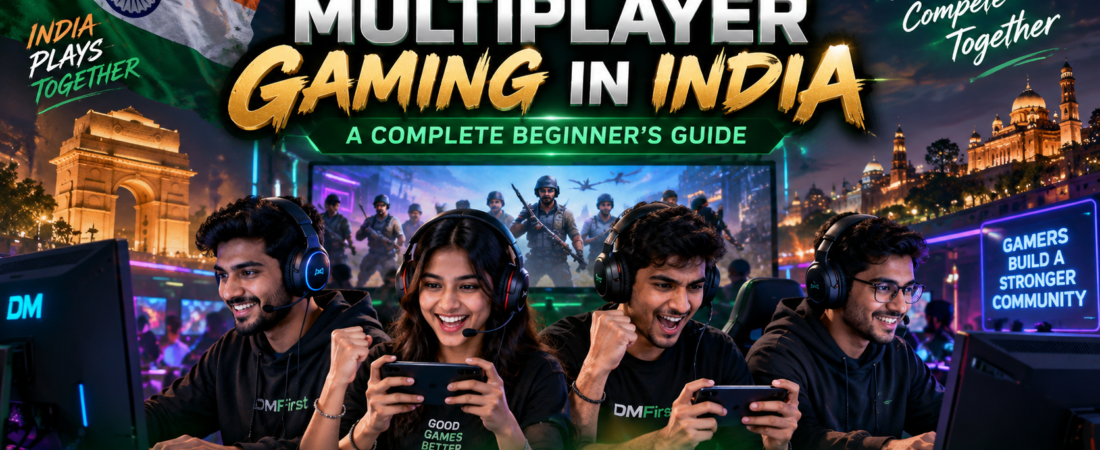
Multiplayer gaming in India allows players to connect, cooperate and compete with other people through internet-connected games. These experiences are available across smartphones, computers and consoles, ranging from casual games with friends to team-based competitive matches.
For beginners, understanding how multiplayer games work can make it easier to choose suitable games, communicate with other players and protect personal information while playing online. This guide explores multiplayer gaming in India, common multiplayer formats, teamwork, mobile gaming, competitive play, online safety and responsible gaming habits.
What Is Multiplayer Gaming?
Multiplayer gaming refers to video games that allow multiple players to participate in the same gaming experience. Players can connect through the internet or, in some games, through a local network or shared device.
Multiplayer games can involve cooperation, competition or a combination of both. Some games place players into small teams, while others can involve larger groups participating in the same match or virtual environment.
Beginners who want to understand multiplayer games alongside other gaming categories can explore our types of online games guide.
How Multiplayer Games Work
Online multiplayer games use internet connections and game servers to connect players. Depending on the game, players may join matches automatically through matchmaking systems, create private sessions with friends or enter shared online environments.
Matchmaking systems may consider factors such as game mode, region, connection quality or player ranking when creating matches. The exact system varies between games and platforms.
A stable internet connection can be important because delays or interruptions may affect communication and gameplay. Players should also review account, privacy and communication settings before participating in online multiplayer activities.
Popular Types of Multiplayer Games
Multiplayer gaming includes several formats designed around different styles of interaction and competition. Understanding these formats can help beginners choose games that match their interests and preferred way of playing.
Some multiplayer games emphasize cooperation and teamwork, while others focus primarily on competition. Many modern games combine several multiplayer formats within the same title.
Cooperative Games
Cooperative games allow players to work together toward shared objectives. Players may complete missions, solve challenges, explore virtual environments or compete against computer-controlled opponents as a team.
Cooperation often involves communication and coordination, particularly when different players have specific roles or responsibilities within the group.
Competitive Games
Competitive multiplayer games place players or teams against one another. Matches may involve objectives, rankings, points or other systems used to determine performance and results.
Competitive formats can range from casual matches between friends to structured ranked modes designed for players who want a more challenging experience.
Team-Based Games
Team-based multiplayer games organize players into groups that work toward shared objectives. Depending on the game, team members may have different roles, abilities or responsibilities that contribute to the overall strategy.
Communication and coordination can be important in these games because individual decisions may affect the entire team. Beginners can gradually learn common roles, objectives and communication systems as they gain experience.
Battle Royale Games
Battle royale games typically place many players or teams into the same match, with participants competing until a final player or team remains. The playable area may become smaller as the match progresses, encouraging players to move and interact with opponents.
These games can combine exploration, resource collection, positioning and combat. Some battle royale titles also include team-based modes where communication and cooperation become important parts of gameplay.
Sports and Racing Games
Multiplayer sports games allow players to compete through digital versions or adaptations of sports such as cricket and football. Online modes may include individual matches, team competition, rankings or organized events.
Racing games use a similar competitive structure but focus on vehicles, tracks and finishing positions. Players may compete directly against friends or other online users depending on the available multiplayer modes.
Strategy and Role-Playing Games
Multiplayer strategy games emphasize planning, resource management and decision-making. Players may cooperate with teammates, compete against opponents or participate in larger online environments where decisions can influence long-term progress.
Multiplayer role-playing games often combine character development, exploration and missions with social features. Players may form groups, complete objectives together or participate in competitive activities depending on the game.
Mobile Multiplayer Gaming in India
Mobile multiplayer gaming in India allows players to access online multiplayer experiences directly through smartphones and tablets. Depending on the game, players can join casual matches, cooperate with friends, participate in ranked modes or communicate with teammates through built-in features.
Before playing, users should check whether their device meets the game’s operating system, storage, memory and performance requirements. A stable internet connection can also be important for real-time multiplayer matches.
Players interested specifically in smartphone gaming can explore our mobile gaming in India guide for more information about mobile games, device requirements and online safety.
Teamwork and Communication in Multiplayer Games
Teamwork can be an important part of multiplayer games where players share objectives or compete as a group. Effective teamwork often involves understanding individual roles, paying attention to teammates and coordinating decisions during a match.
Many multiplayer games provide communication tools such as text chat, voice chat, quick messages or visual signals. Players can use these features to share useful information, coordinate strategies and respond to changing situations during gameplay.
Communication should remain respectful. Players can use mute, block or report features when they encounter unwanted messages, harassment or disruptive behavior from other users.
Multiplayer Gaming and Esports
Multiplayer gaming plays an important role in competitive gaming because many esports titles are built around competition between individual players or organized teams. Competitive formats may include ranked matches, qualifiers, tournaments and leagues.
However, not every multiplayer game or ranked match should automatically be considered esports. Esports generally involves organized competition with defined rules, structured matches and competitive events.
Readers interested in organized competitive gaming can learn more through our esports in India guide.
Smartphone players interested in organized multiplayer competition can also explore our mobile esports in India guide for more information about mobile tournaments, device requirements, teamwork and competitive formats.
Multiplayer games can also include ranked and competitive modes outside formal esports events. Readers can learn more about rankings, matchmaking and competitive skills in our competitive gaming in India guide.
How Beginners Can Choose a Multiplayer Game
Beginners can start by considering the type of multiplayer experience they prefer. Players interested in teamwork may enjoy cooperative or team-based games, while those who prefer direct competition may choose sports, racing, strategy or other competitive formats.
Device compatibility is also important. Before installing a game, players should check operating system requirements, available storage, memory, internet requirements and any additional hardware that may be needed.
Beginners should also review age ratings, developer information, privacy settings and communication features. When a game includes optional purchases or subscriptions, understanding the pricing and payment terms before spending money can help avoid unexpected charges.
Online Safety in Multiplayer Games
Multiplayer games can involve communication and interaction with people that players do not know personally. Protecting account information and understanding privacy settings are important parts of participating safely in online multiplayer environments.
Players should use strong and unique passwords, enable two-factor authentication when available and avoid sharing passwords, verification codes or payment information with other users. Suspicious links, unofficial downloads and messages offering unusual rewards should also be treated carefully.
Privacy, mute, block and report features can help players manage unwanted interactions. For more detailed security guidance, readers can explore our online gaming safety in India guide.
Responsible Multiplayer Gaming
Multiplayer gaming can encourage longer sessions because matches, team activities and social interactions may continue over time. Players can maintain healthier habits by setting reasonable gaming limits and taking regular breaks during longer sessions.
Gaming should remain balanced with sleep, education, work, physical activity and other everyday responsibilities. Players should also understand optional purchases, subscriptions and other paid features before spending money inside a game.
Competitive results and rankings can be enjoyable parts of multiplayer gaming, but they should remain in perspective. Taking breaks after difficult matches and maintaining respectful communication can contribute to a healthier multiplayer experience.
Frequently Asked Questions
1. What is multiplayer gaming?
Multiplayer gaming refers to video games that allow multiple players to participate in the same gaming experience through an internet connection, local network or shared device.
2. What are the main types of multiplayer games?
Common multiplayer formats include cooperative games, competitive games, team-based games, battle royale games, sports and racing games, strategy games and role-playing games.
3. Can multiplayer games be played on smartphones?
Yes. Many multiplayer games are available on smartphones and tablets, although device and internet requirements vary between games.
4. What is the difference between multiplayer gaming and esports?
Multiplayer gaming is a broad category involving games played by multiple people. Esports refers more specifically to organized competitive gaming involving structured matches, tournaments or leagues.
5. How can beginners stay safe in multiplayer games?
Beginners can use strong passwords, enable two-factor authentication, protect personal information, avoid suspicious links and use privacy, mute, block or report features when necessary.
6. How can players practice responsible multiplayer gaming?
Players can set reasonable gaming limits, take regular breaks, maintain respectful communication and balance gaming with sleep, work, education, physical activity and other responsibilities.
Final Thoughts
Multiplayer gaming in India provides many ways for players to cooperate, compete and interact through smartphones, computers and consoles. Understanding different multiplayer formats can help beginners choose games that match their interests, devices and preferred style of play.
Teamwork, communication, online safety and responsible gaming habits are also important parts of the multiplayer experience. Players should protect their account information, understand game features and maintain a healthy balance between gaming and everyday responsibilities.
For more gaming insights, guides and updates, visit DMFirst to explore more information about online gaming, mobile gaming, esports and gaming safety.