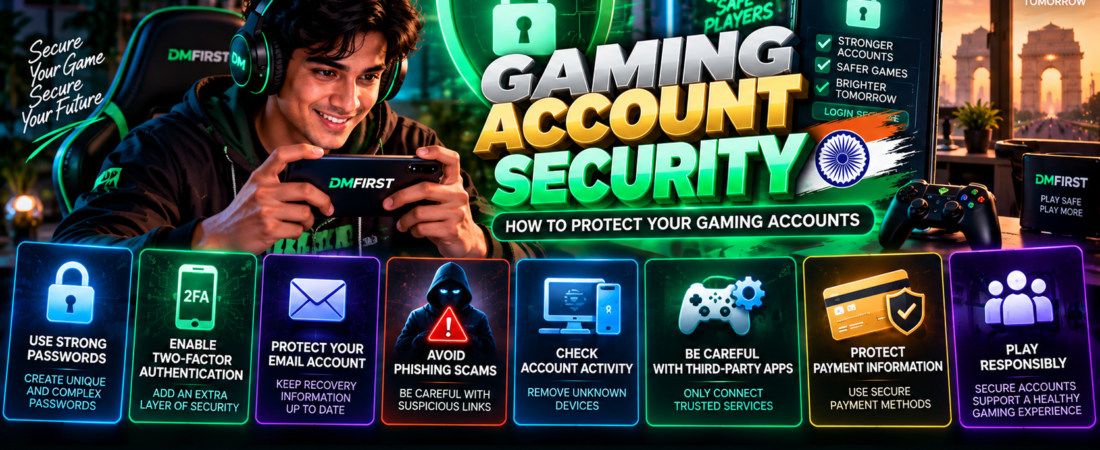
Gaming Account Security: How to Protect Your Gaming Accounts
Gaming accounts can contain progress, digital items, personal settings and other information that players may want to protect.
As games become increasingly connected to online services and communities, gaming account security is an important part of maintaining a safer gaming experience.
Strong passwords, additional authentication and careful account management can reduce unnecessary security risks.
Why Gaming Account Security Matters
Modern gaming accounts can connect players with games, friends, communities and digital services.
Some accounts may also be connected with email addresses or payment methods.
Protecting access to these accounts can help prevent unauthorized changes and other security problems.
Gaming Accounts Are Digital Accounts
Players should treat gaming accounts with the same care they give other important online accounts.
Login credentials should remain private, and security settings should be reviewed when available.
Use a Strong and Unique Password
A strong password is one of the basic protections for an online account.
Avoid using passwords that are easy to guess from publicly available information.
More importantly, avoid using the same password across multiple services.
Why Password Reuse Creates Risk
If the same password is used on several websites, a security problem involving one service can potentially create problems for other accounts using those credentials.
Using unique passwords limits this type of exposure.
Consider a Password Manager
Password managers can help users generate and store unique passwords.
Players should choose reputable password-management tools and protect the password manager itself with appropriate security measures.
Enable Two-Factor Authentication
Two-factor authentication, often called 2FA, adds another verification step during login.
Depending on the service, this may involve an authenticator application, security key or another supported verification method.
Enabling additional authentication can strengthen gaming account security.
Keep Authentication Codes Private
Verification codes should not be shared with other players.
Someone requesting your authentication code may be attempting to gain access to your account.
Treat recovery codes and backup authentication information carefully as well.
Protect the Email Connected to Your Gaming Account
An email account is often important for password resets and account recovery.
For this reason, protecting the email associated with a gaming account is also important.
Use a strong password and additional authentication on the email account when available.
Check Recovery Information
Make sure recovery information remains current.
Outdated email addresses or other recovery methods can make account recovery more difficult.
Learn to Recognize Phishing Attempts
Phishing attempts are designed to persuade users to provide login information through misleading messages or websites.
Gaming-related phishing may use offers, rewards, account warnings or other messages to attract attention.
Our mobile gaming safety guide discusses suspicious links and other mobile gaming risks in greater detail.
Avoid Urgent Login Requests
Be cautious when an unexpected message claims that immediate login is required.
Instead of following the message link, consider opening the official application or known website directly.
Check Website Addresses Before Logging In
Fake login pages can imitate legitimate websites.
Before entering account credentials, check whether you are using the correct service.
Bookmarks or official applications can help reduce dependence on links received through messages.
Avoid Sharing Gaming Accounts
Sharing account credentials creates additional security risks.
Once another person knows your login information, you have less control over how the account is accessed.
Some gaming services may also restrict account sharing under their terms.
Never Sell or Trade Login Credentials Casually
Account trading can create security and ownership problems.
Players should review the rules of the relevant gaming service and avoid giving credentials to unknown individuals.
Be Careful With Third-Party Applications
Some websites and applications may ask players to connect their gaming accounts.
Before granting access, check what service is requesting permission and what information it will receive.
Remove access for applications that are no longer needed when the platform provides that option.
Review Account Activity
Some gaming services provide information about login sessions, connected devices or account activity.
Reviewing these areas can help users notice unfamiliar access.
Sign Out of Devices You No Longer Use
Old phones, computers or shared devices may remain connected to an account.
If a platform provides session management, remove devices that should no longer have access.
Secure Gaming Accounts on Shared Devices
Players sometimes use shared computers, tablets or phones.
Avoid saving passwords on devices you do not control.
Remember to sign out when finished and avoid leaving sensitive account information accessible.
Protect Payment Information
Some gaming accounts can store payment methods.
Review whether stored payment information is necessary and use available purchase authentication features.
Our mobile gaming safety guide provides additional information about safer mobile payments and application permissions.
Gaming Account Security in Multiplayer Games
Multiplayer games can involve communication with strangers and participation in larger online communities.
Players should be cautious when receiving links, files or requests for account information from other users.
Our multiplayer gaming in India guide explains multiplayer communities in more detail.
Account Security for Competitive Players
Competitive players may have accounts containing rankings, progression and other gaming history.
Protecting these accounts is therefore particularly important.
Readers interested in competitive mobile gaming can explore our mobile esports in India guide.
Gaming Technology and Account Security
Gaming security continues to develop alongside authentication systems, devices and online infrastructure.
New security tools can help services protect accounts, but users still need to apply appropriate security practices.
Our gaming technology in India guide explores technologies influencing modern gaming.
Online Gaming Safety Beyond Account Security
Account protection is only one part of gaming safety.
Players should also consider privacy, suspicious downloads, online communication and device security.
Our broader online gaming safety in India guide covers these topics.
Responsible Gaming and Account Management
Security practices should be combined with balanced gaming habits.
Players should manage both their account security and their time spent gaming.
Our responsible gaming in India guide provides guidance about healthier gaming habits.
Gaming Account Security with DMFirst
DMFirst publishes informational guides covering gaming security, mobile gaming, esports, technology and India’s wider gaming ecosystem.
These resources can help players understand practical considerations when using modern gaming services.
Protecting login credentials is another important part of online safety. Our guide to gaming account security explains strong passwords, two-factor authentication, phishing awareness and other practices that can help players protect their accounts.
Final Thoughts
Gaming account security does not require complicated techniques.
Using unique passwords, enabling two-factor authentication, protecting connected email accounts and avoiding suspicious links can provide important layers of protection.
Players should periodically review their account settings as gaming services and security tools continue to evolve.
Frequently Asked Questions
What is gaming account security?
Gaming account security refers to practices used to protect gaming accounts from unauthorized access and other account-related security risks.
Should I use a different password for every gaming account?
Using unique passwords helps prevent a compromised password from affecting multiple accounts.
Is two-factor authentication useful for gaming accounts?
When supported, two-factor authentication provides an additional verification step beyond the password.
Should I share my gaming account with friends?
Sharing login credentials increases security risks and may conflict with the rules of some gaming services.
What should I do if I receive a suspicious gaming login link?
Avoid entering your credentials through the link. Access the official application or known website directly and review your account security.