Category: Guides

Helpful guides about gaming, esports and digital entertainment.

  • Gaming Privacy: How to Protect Your Personal Information While Gaming

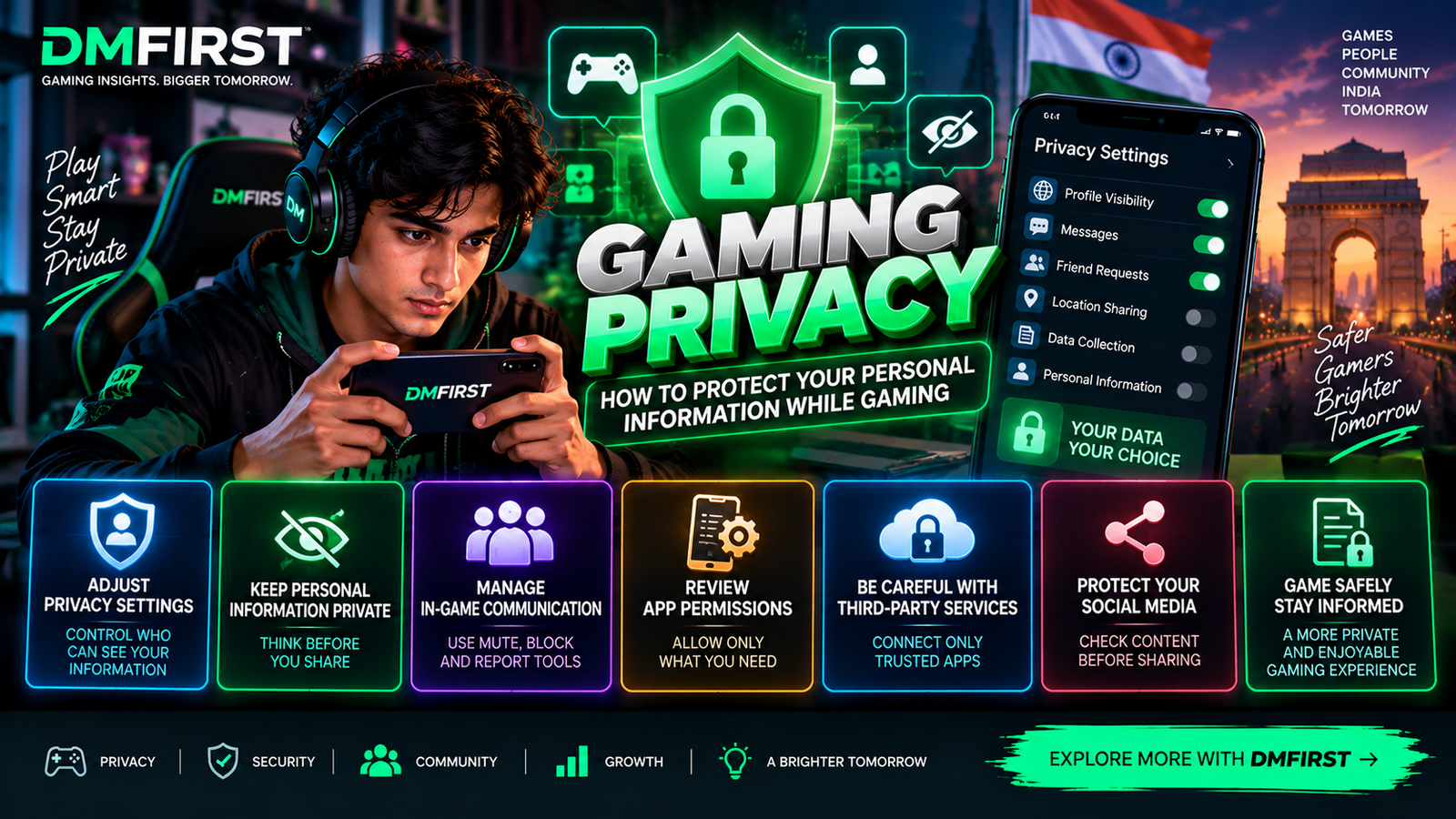
    Gaming Privacy: How to Protect Your Personal Information While Gaming

    Gaming Privacy: How to Protect Your Personal Information While Gaming

    Online games can connect players with friends, communities and people from different locations. These social features can make gaming more interactive, but they also make privacy awareness important.

    Understanding gaming privacy can help players make better decisions about the information they share, the permissions they grant and the people they communicate with.

    Players do not need to avoid online features completely. Instead, they can learn how privacy settings and careful information sharing contribute to a safer gaming experience.

    Why Gaming Privacy Matters

    Gaming accounts can contain usernames, profile information, friend lists, communication history and other account-related data.

    Depending on the service, additional information may also be associated with an account.

    Players should understand which information is public, which information remains private and which settings they can control.

    Privacy and Security Are Different

    Privacy and security are closely related but are not exactly the same.

    Security focuses on protecting accounts and systems from unauthorized access. Privacy focuses more broadly on how information is collected, shared and made visible.

    Our gaming account security guide explains account protection in greater detail.

    Review Your Gaming Privacy Settings

    Many games and gaming platforms provide privacy controls.

    These settings may determine who can see a profile, send messages, invite a player to groups or view gaming activity.

    Players should review these settings rather than relying entirely on defaults.

    Decide Who Can Contact You

    Some platforms allow users to restrict messages or invitations.

    Depending on your preferences, communication may be limited to friends, approved contacts or other selected groups.

    These controls can reduce unwanted interactions.

    Be Careful With Personal Information

    Players should think carefully before sharing personal information through games or gaming communities.

    Information that seems harmless individually can sometimes reveal more when combined with other details.

    Avoid unnecessarily sharing private contact information, passwords, verification codes or financial information.

    Keep Login Information Private

    Login credentials should never be posted publicly or sent to other players.

    Authentication and recovery information should also be protected.

    For additional account protection practices, read our gaming account security guide.

    Choose Your Public Gaming Profile Carefully

    A gaming profile can sometimes be visible to a large audience.

    Consider what information actually needs to appear publicly.

    A username does not necessarily need to reveal a player’s full legal name or other identifying information.

    Review Profile Visibility

    Some platforms allow users to control who can see achievements, activity, friends or other profile information.

    Review these options and select settings appropriate for how you use the platform.

    Understand In-Game Communication

    Multiplayer games often include text chat, voice communication and other social features.

    These systems can help players coordinate and build communities, but communication with strangers should still be approached carefully.

    Our multiplayer gaming in India guide explains multiplayer gaming and online communities in more detail.

    Use Mute, Block and Report Features

    Players do not have to continue unwanted conversations.

    When available, mute, block and reporting tools can help users manage interactions.

    Learn where these controls are located before they are needed.

    Review Application Permissions

    Mobile games can request permission to use certain device features.

    These might include notifications, microphones, cameras or other capabilities depending on the application.

    Players should consider whether each permission is necessary for the features they use.

    Permissions Can Usually Be Reviewed Later

    Mobile operating systems generally provide settings where application permissions can be reviewed.

    Players can periodically check these settings and remove permissions they no longer want to provide.

    Our mobile gaming safety guide covers additional smartphone security practices.

    Be Careful With Third-Party Services

    Some games allow connections to other applications or services.

    Before connecting an account, understand what permissions are being requested.

    Avoid granting access simply because a website or application promises gaming rewards or additional features.

    Gaming Privacy and Social Media

    Players may share screenshots, achievements or gameplay clips through social platforms.

    Before posting, check whether the content accidentally reveals private information.

    Screenshots can sometimes contain usernames, notifications, account details or other information that was not intended for publication.

    Think Before Sharing

    Once information is publicly posted, controlling how other people copy or redistribute it can become difficult.

    Review screenshots and recordings before uploading them.

    Privacy When Streaming Games

    Livestreaming introduces additional privacy considerations.

    Streamers should check what appears on their screen before broadcasting.

    Notifications, email addresses, private messages and other account information can sometimes appear unexpectedly.

    Separate Public and Private Information

    Creators may benefit from keeping public-facing gaming information separate from information intended to remain private.

    This can make accidental disclosure less likely.

    Privacy in Mobile Gaming

    Smartphones contain many different applications and personal information.

    Mobile players should therefore pay attention to app permissions, account settings and notifications.

    Our mobile gaming safety guide provides more information about protecting mobile gaming experiences.

    Gaming Privacy for Younger Players

    Privacy awareness is particularly important when younger players use social gaming features.

    Age-appropriate platform settings and supervision can help reduce unnecessary information sharing.

    Players should use the safety and privacy controls provided by the relevant service.

    Gaming Technology and Privacy

    As gaming technology evolves, games can introduce new social, cloud and cross-platform features.

    These technologies may create new ways for players to interact and share information.

    Our gaming technology in India guide explores technologies shaping modern gaming experiences.

    Online Gaming Safety and Privacy

    Privacy is one part of broader online safety.

    Players should combine appropriate privacy settings with strong account security, trusted downloads and caution around suspicious links.

    Our online gaming safety in India guide covers these broader safety practices.

    Responsible Gaming and Digital Awareness

    Healthy gaming involves more than managing playing time.

    Players should also understand the digital environments in which they participate.

    Our responsible gaming in India guide discusses balanced gaming habits and responsible participation.

    Gaming Privacy with DMFirst

    DMFirst publishes informational resources about gaming privacy, security, mobile gaming, esports and online safety.

    These guides are designed to help readers better understand modern gaming environments and the choices available to them.

    Final Thoughts

    Gaming privacy begins with understanding what information is visible and how online services are being used.

    Reviewing privacy settings, limiting unnecessary personal information, checking application permissions and managing online communication can help players maintain greater control over their information.

    Privacy settings and platform features can change, so players should review them periodically.

    Frequently Asked Questions

    What is gaming privacy?

    Gaming privacy concerns how personal and account-related information is collected, shared, displayed and controlled while using games and gaming services.

    Should I use my real name as my gaming username?

    That depends on your preferences and the platform’s requirements. Players should consider how much identifying information they want to make publicly visible.

    Should I review game permissions?

    Yes. Reviewing application permissions can help users understand which device features an application can access.

    Can other players see my gaming activity?

    This depends on the platform and its privacy settings. Review profile visibility and activity-sharing controls.

    How can I improve privacy while playing multiplayer games?

    Review communication settings, limit unnecessary personal information and use mute, block or reporting features when appropriate.
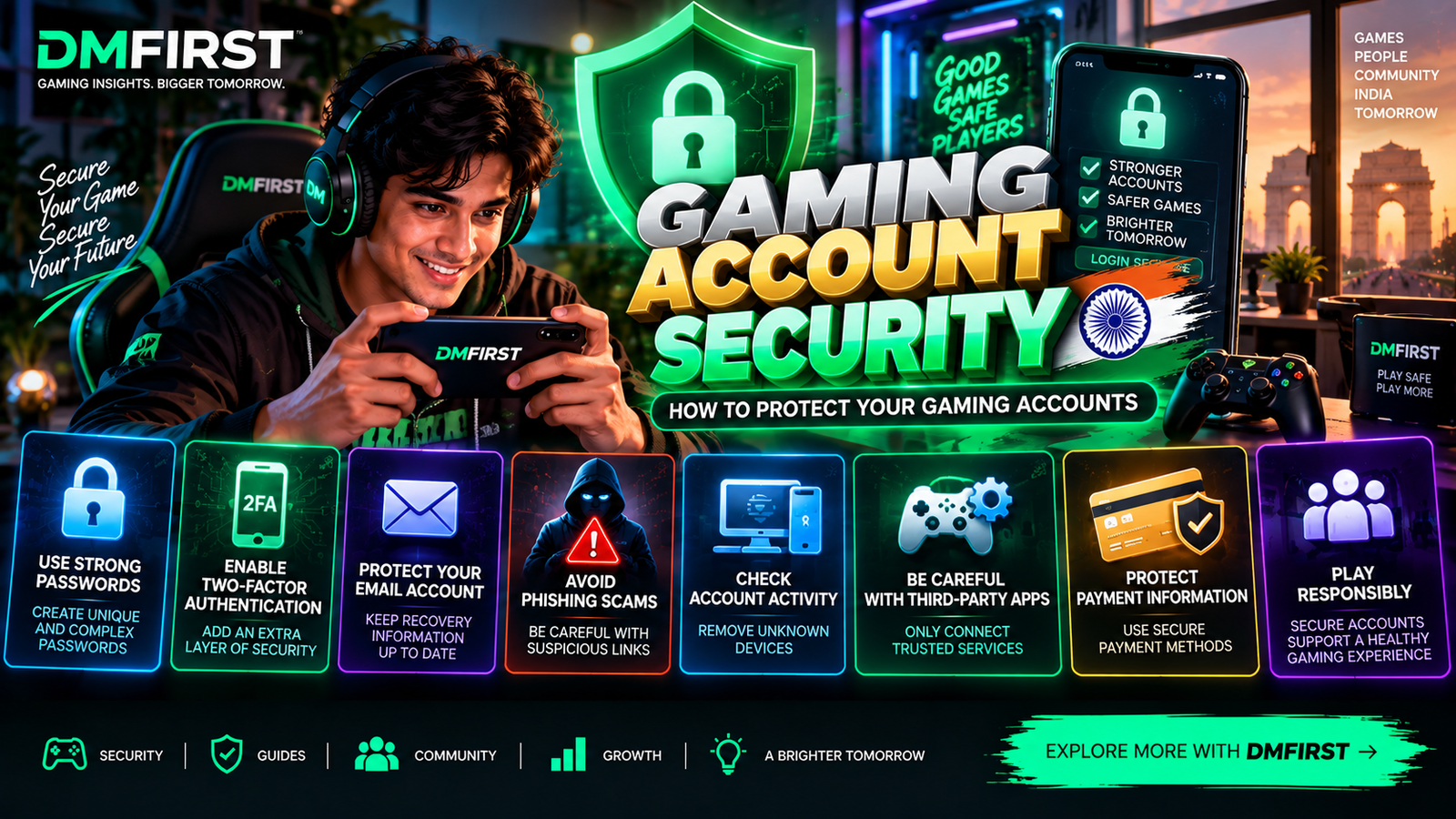
  • Gaming Account Security: How to Protect Your Gaming Accounts

    Gaming Account Security: How to Protect Your Gaming Accounts

    Gaming Account Security: How to Protect Your Gaming Accounts

    Gaming accounts can contain progress, digital items, personal settings and other information that players may want to protect.

    As games become increasingly connected to online services and communities, gaming account security is an important part of maintaining a safer gaming experience.

    Strong passwords, additional authentication and careful account management can reduce unnecessary security risks.

    Why Gaming Account Security Matters

    Modern gaming accounts can connect players with games, friends, communities and digital services.

    Some accounts may also be connected with email addresses or payment methods.

    Protecting access to these accounts can help prevent unauthorized changes and other security problems.

    Gaming Accounts Are Digital Accounts

    Players should treat gaming accounts with the same care they give other important online accounts.

    Login credentials should remain private, and security settings should be reviewed when available.

    Use a Strong and Unique Password

    A strong password is one of the basic protections for an online account.

    Avoid using passwords that are easy to guess from publicly available information.

    More importantly, avoid using the same password across multiple services.

    Why Password Reuse Creates Risk

    If the same password is used on several websites, a security problem involving one service can potentially create problems for other accounts using those credentials.

    Using unique passwords limits this type of exposure.

    Consider a Password Manager

    Password managers can help users generate and store unique passwords.

    Players should choose reputable password-management tools and protect the password manager itself with appropriate security measures.

    Enable Two-Factor Authentication

    Two-factor authentication, often called 2FA, adds another verification step during login.

    Depending on the service, this may involve an authenticator application, security key or another supported verification method.

    Enabling additional authentication can strengthen gaming account security.

    Keep Authentication Codes Private

    Verification codes should not be shared with other players.

    Someone requesting your authentication code may be attempting to gain access to your account.

    Treat recovery codes and backup authentication information carefully as well.

    Protect the Email Connected to Your Gaming Account

    An email account is often important for password resets and account recovery.

    For this reason, protecting the email associated with a gaming account is also important.

    Use a strong password and additional authentication on the email account when available.

    Check Recovery Information

    Make sure recovery information remains current.

    Outdated email addresses or other recovery methods can make account recovery more difficult.

    Learn to Recognize Phishing Attempts

    Phishing attempts are designed to persuade users to provide login information through misleading messages or websites.

    Gaming-related phishing may use offers, rewards, account warnings or other messages to attract attention.

    Our mobile gaming safety guide discusses suspicious links and other mobile gaming risks in greater detail.

    Avoid Urgent Login Requests

    Be cautious when an unexpected message claims that immediate login is required.

    Instead of following the message link, consider opening the official application or known website directly.

    Check Website Addresses Before Logging In

    Fake login pages can imitate legitimate websites.

    Before entering account credentials, check whether you are using the correct service.

    Bookmarks or official applications can help reduce dependence on links received through messages.

    Avoid Sharing Gaming Accounts

    Sharing account credentials creates additional security risks.

    Once another person knows your login information, you have less control over how the account is accessed.

    Some gaming services may also restrict account sharing under their terms.

    Never Sell or Trade Login Credentials Casually

    Account trading can create security and ownership problems.

    Players should review the rules of the relevant gaming service and avoid giving credentials to unknown individuals.

    Be Careful With Third-Party Applications

    Some websites and applications may ask players to connect their gaming accounts.

    Before granting access, check what service is requesting permission and what information it will receive.

    Remove access for applications that are no longer needed when the platform provides that option.

    Review Account Activity

    Some gaming services provide information about login sessions, connected devices or account activity.

    Reviewing these areas can help users notice unfamiliar access.

    Sign Out of Devices You No Longer Use

    Old phones, computers or shared devices may remain connected to an account.

    If a platform provides session management, remove devices that should no longer have access.

    Secure Gaming Accounts on Shared Devices

    Players sometimes use shared computers, tablets or phones.

    Avoid saving passwords on devices you do not control.

    Remember to sign out when finished and avoid leaving sensitive account information accessible.

    Protect Payment Information

    Some gaming accounts can store payment methods.

    Review whether stored payment information is necessary and use available purchase authentication features.

    Our mobile gaming safety guide provides additional information about safer mobile payments and application permissions.

    Gaming Account Security in Multiplayer Games

    Multiplayer games can involve communication with strangers and participation in larger online communities.

    Players should be cautious when receiving links, files or requests for account information from other users.

    Our multiplayer gaming in India guide explains multiplayer communities in more detail.

    Account Security for Competitive Players

    Competitive players may have accounts containing rankings, progression and other gaming history.

    Protecting these accounts is therefore particularly important.

    Readers interested in competitive mobile gaming can explore our mobile esports in India guide.

    Gaming Technology and Account Security

    Gaming security continues to develop alongside authentication systems, devices and online infrastructure.

    New security tools can help services protect accounts, but users still need to apply appropriate security practices.

    Our gaming technology in India guide explores technologies influencing modern gaming.

    Online Gaming Safety Beyond Account Security

    Account protection is only one part of gaming safety.

    Players should also consider privacy, suspicious downloads, online communication and device security.

    Our broader online gaming safety in India guide covers these topics.

    Responsible Gaming and Account Management

    Security practices should be combined with balanced gaming habits.

    Players should manage both their account security and their time spent gaming.

    Our responsible gaming in India guide provides guidance about healthier gaming habits.

    Gaming Account Security with DMFirst

    DMFirst publishes informational guides covering gaming security, mobile gaming, esports, technology and India’s wider gaming ecosystem.

    These resources can help players understand practical considerations when using modern gaming services.

    Protecting login credentials is another important part of online safety. Our guide to gaming account security explains strong passwords, two-factor authentication, phishing awareness and other practices that can help players protect their accounts.

    Final Thoughts

    Gaming account security does not require complicated techniques.

    Using unique passwords, enabling two-factor authentication, protecting connected email accounts and avoiding suspicious links can provide important layers of protection.

    Players should periodically review their account settings as gaming services and security tools continue to evolve.

    Frequently Asked Questions

    What is gaming account security?

    Gaming account security refers to practices used to protect gaming accounts from unauthorized access and other account-related security risks.

    Should I use a different password for every gaming account?

    Using unique passwords helps prevent a compromised password from affecting multiple accounts.

    Is two-factor authentication useful for gaming accounts?

    When supported, two-factor authentication provides an additional verification step beyond the password.

    Should I share my gaming account with friends?

    Sharing login credentials increases security risks and may conflict with the rules of some gaming services.

    What should I do if I receive a suspicious gaming login link?

    Avoid entering your credentials through the link. Access the official application or known website directly and review your account security.

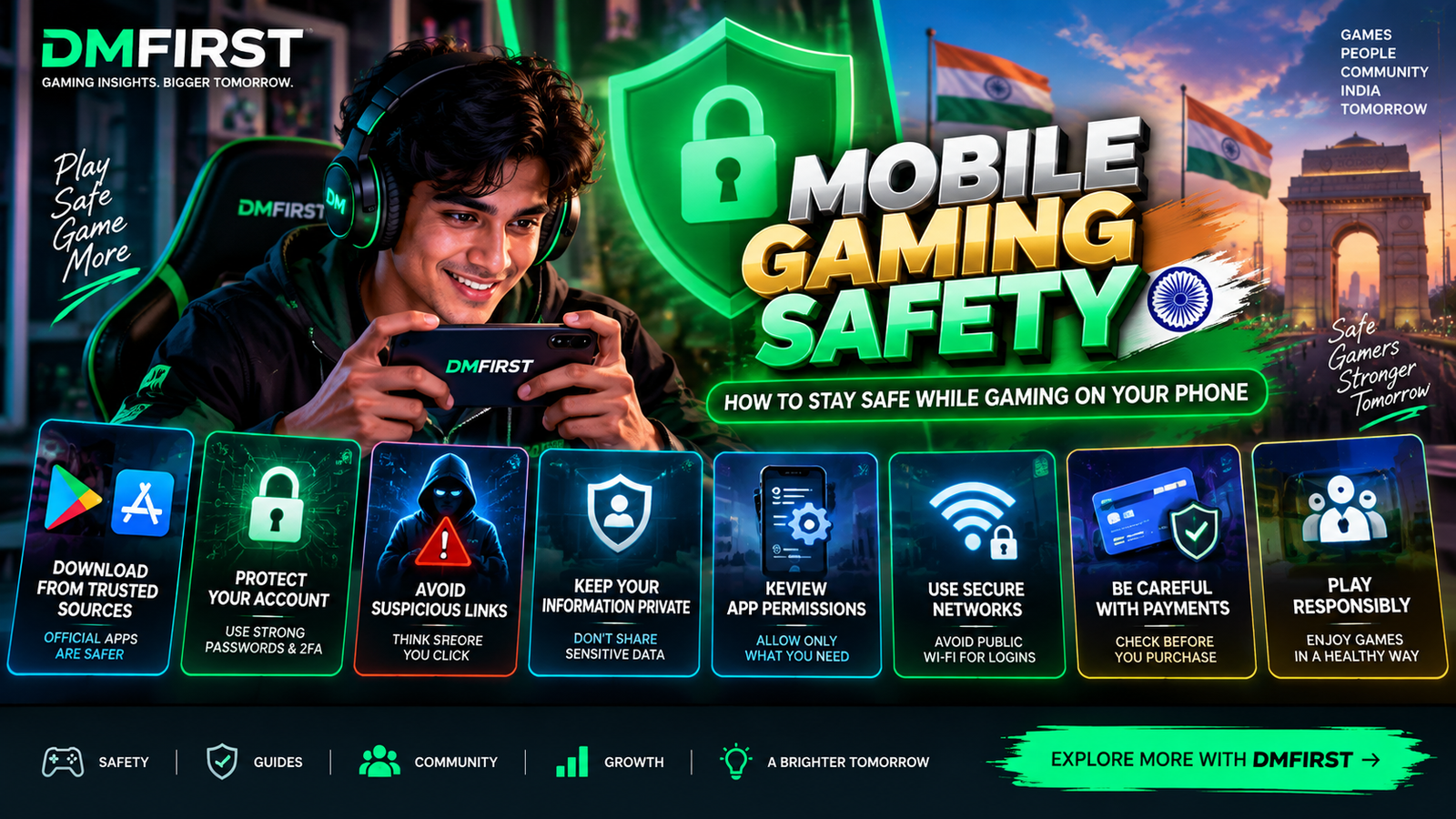
  • Mobile Gaming Safety: How to Stay Safe While Gaming on Your Phone

    Mobile Gaming Safety: How to Stay Safe While Gaming on Your Phone

    Mobile Gaming Safety: How to Stay Safe While Gaming on Your Phone

    Smartphones make games convenient and accessible, but mobile players should also understand how to protect their accounts, devices and personal information.

    Good mobile gaming safety involves more than simply choosing a strong password. Players should also pay attention to where games are downloaded, which permissions applications request, how payments are handled and who they communicate with online.

    A few basic security habits can make mobile gaming safer and more enjoyable.

    Why Mobile Gaming Safety Matters

    Mobile games can connect players with accounts, online communities, payment systems and other digital services.

    This means gaming accounts may contain information that users should protect.

    Security risks can include suspicious links, fake login pages, unofficial downloads and attempts to obtain account information.

    As mobile gaming in India continues to expand, understanding account security, trusted downloads and privacy settings is becoming increasingly important for players.

    Security Starts With the Player

    Gaming platforms can provide security features, but players still need to use them correctly.

    Simple decisions such as avoiding unknown downloads and protecting login information can reduce unnecessary risks.

    Download Games From Trusted Sources

    One of the first safety considerations is where a game comes from.

    Whenever possible, players should use legitimate and trusted distribution channels rather than downloading applications from unfamiliar websites.

    Unofficial files may not provide the same level of trust or verification.

    Be Careful With Modified Game Files

    Players may encounter websites offering modified versions of games or applications.

    Installing software from unknown sources can expose a device to security and privacy risks.

    Consider whether the source is trustworthy before installing anything.

    Protect Your Gaming Account

    Gaming accounts should be protected similarly to other important online accounts.

    Use a strong password that is difficult for other people to guess.

    Avoid reusing the same password across many services.

    Our broader online gaming safety in India guide provides additional information about gaming account protection.

    Enable Additional Authentication

    If a gaming service provides two-factor or multi-factor authentication, consider enabling it.

    Additional authentication can make unauthorized account access more difficult even if a password becomes compromised.

    Never Share Verification Codes

    Authentication codes and account recovery information should be kept private.

    A legitimate login process should not require you to send your private verification code to another player.

    Watch for Phishing and Suspicious Links

    Phishing attempts can try to convince players to enter their account credentials on fake websites.

    Messages may claim that a player has won an item, needs to verify an account or must immediately take action.

    Avoid entering login details after following an unfamiliar link.

    Check Before You Click

    Look carefully at where a link leads.

    If you need to access an account, opening the official application or typing the known website address yourself can be safer than following an unexpected message.

    Protect Personal Information

    Online gaming can involve communication with people you do not know personally.

    Avoid unnecessarily sharing private information such as passwords, verification codes, financial information or other sensitive account details.

    Review the privacy settings provided by the game or platform.

    Usernames and Public Profiles

    Remember that information placed in a public gaming profile may be visible to other users.

    Consider what information actually needs to be publicly available.

    Review App Permissions

    Mobile applications may request access to different device features.

    Some permissions may be required for legitimate functionality, while others may not be necessary for how you use the game.

    Review permissions through your device settings and consider whether they make sense for the application’s features.

    Keep Your Phone and Games Updated

    Software updates can contain security fixes as well as new features.

    Keeping the operating system and gaming applications updated can help ensure that known vulnerabilities receive available fixes.

    Updates should preferably come through trusted and official sources.

    Use Secure Networks

    Public networks can vary significantly in security.

    Be cautious when accessing important accounts or entering sensitive information while connected to unfamiliar networks.

    Players should also protect their home Wi-Fi with appropriate security settings.

    Be Careful With In-Game Purchases

    Many mobile games include optional purchases.

    Before completing a transaction, confirm what is being purchased, its price and which payment method is being used.

    Players should also review whether their device stores payment credentials.

    Protect Payment Access

    Device authentication can help prevent unintended purchases.

    This can be particularly useful when a phone or tablet is shared with other people.

    Understand Multiplayer Safety

    Mobile games increasingly include multiplayer and social features.

    Players may communicate with friends, teammates and strangers through these systems.

    Our multiplayer gaming in India guide explains how multiplayer experiences and communities work.

    Use Blocking and Reporting Tools

    Many platforms provide tools for blocking or reporting problematic accounts.

    Players should familiarize themselves with the controls available in the games they use.

    Be Careful With Gaming Communities

    Gaming communities can be useful for discovering strategies, updates and other players.

    However, links and downloads shared by community members should not automatically be considered trustworthy.

    Evaluate the source before providing information or installing software.

    Mobile Gaming Safety for Different Game Genres

    Security considerations can apply across many types of games.

    Casual, multiplayer, strategy, racing and competitive games can all involve accounts, online services or optional purchases.

    Our guide to the types of mobile games explains the different genres players may encounter.

    Players who prefer accessible experiences can also explore casual gaming in India.

    Mobile Esports and Account Security

    Competitive players may place greater value on their gaming accounts because of rankings, progression or participation in communities.

    Account protection therefore remains particularly important.

    Our mobile esports in India guide provides more information about competitive mobile gaming.

    Technology and Mobile Gaming Security

    Security technologies continue to evolve alongside gaming.

    Authentication systems, device security features and software updates can contribute to safer gaming experiences.

    Our guide to gaming technology in India explores several technologies shaping modern gaming.

    Healthy Gaming Habits Matter Too

    Digital safety and healthy gaming habits are related but different topics.

    Players should protect their accounts while also maintaining an appropriate balance between gaming and other daily activities.

    Our responsible gaming in India guide covers balanced gaming habits in greater detail.

    Mobile Gaming Safety and DMFirst

    DMFirst publishes informational guides covering gaming safety, mobile gaming, esports, technology and developments across India’s gaming ecosystem.

    Players can use these resources to better understand both gaming opportunities and basic digital safety practices.

    As mobile games become increasingly connected to online accounts, communities and payment systems, mobile gaming safety is also important. Players can benefit from understanding account protection, trusted downloads, application permissions and suspicious links.

    Final Thoughts

    Mobile gaming safety begins with simple habits.

    Downloading games from trusted sources, using strong passwords, enabling additional authentication, reviewing app permissions and avoiding suspicious links can help protect players and their accounts.

    Security threats can change over time, so players should continue paying attention to the security tools and guidance provided by the services and devices they use.

    Frequently Asked Questions

    What is mobile gaming safety?

    Mobile gaming safety refers to practices that help protect gaming accounts, devices, personal information and payment details while playing games on mobile devices.

    How can I protect my mobile gaming account?

    Use a strong unique password, enable additional authentication when available and never share verification codes or account recovery information.

    Are unofficial game downloads safe?

    Downloads from unknown sources can create additional security risks. Using legitimate and trusted distribution sources is generally safer.

    Should I enable two-factor authentication for gaming accounts?

    When a gaming service provides additional authentication, enabling it can provide another layer of account protection.

    What should I do with suspicious gaming links?

    Avoid entering account credentials through unfamiliar links. Access the official application or known website directly when you need to manage your account.

  • Gaming Technology in India: How Technology Is Changing Gaming

    Gaming Technology in India: How Technology Is Changing Gaming

    Gaming Technology in India: How Technology Is Changing Gaming

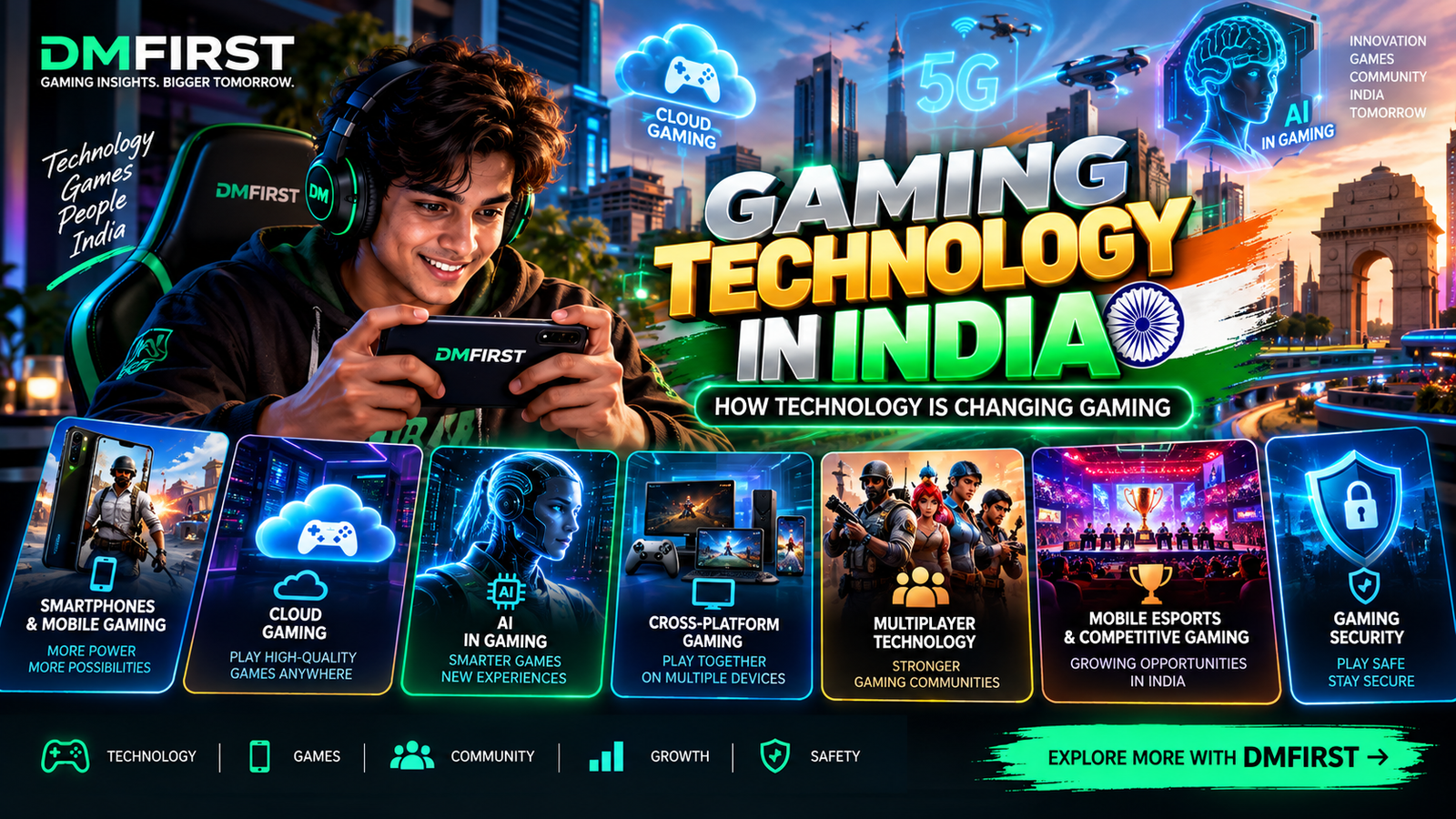
    Technology plays an important role in how games are created, distributed and experienced. Improvements in smartphones, internet connectivity, cloud infrastructure and software development have expanded what modern games can offer.

    Gaming technology in India is also connected with the growth of mobile gaming, esports, online communities and other forms of digital entertainment.

    Understanding these technologies can help players see how the gaming experience continues to evolve.

    How Technology Influences Modern Gaming

    Gaming technology includes both hardware and software.

    Smartphones, computers and gaming devices provide the hardware needed to run games, while game engines, servers, networking technologies and development tools support the experiences players see on their screens.

    As these technologies improve, developers can create more sophisticated gaming experiences.

    Improvements in smartphones, connectivity and gaming technology continue to influence the development of mobile gaming in India and the experiences available to players.

    Hardware and Software Work Together

    A game depends on more than graphics.

    Processors handle calculations, graphics systems render visual elements, memory stores active information and software coordinates how these components interact.

    Internet-connected games also depend on networking infrastructure and servers.

    Smartphones and Mobile Gaming Technology

    Smartphones have made digital gaming accessible through devices people already use in everyday life.

    Modern phones can provide increasingly capable processors, high-resolution displays and faster connectivity.

    This has allowed developers to create mobile games with more detailed graphics, multiplayer systems and sophisticated gameplay.

    Our mobile gaming in India guide explains the wider mobile gaming ecosystem.

    Mobile Hardware Continues to Develop

    Improvements in mobile processors and graphics capabilities allow smartphones to handle increasingly demanding applications.

    Display refresh rates, touch responsiveness and battery technology can also influence the gaming experience.

    However, performance varies significantly between devices.

    Mobile Connectivity Matters

    Online mobile games depend on reliable connectivity.

    Connection stability, latency and network conditions can influence multiplayer experiences.

    Improved connectivity can therefore contribute to smoother online gaming when appropriate infrastructure is available.

    Cloud Gaming Technology

    Cloud gaming uses remote computing infrastructure to process a game and stream the resulting experience to a player’s device.

    Instead of performing all processing locally, some of the demanding work occurs on remote servers.

    How Cloud Gaming Works

    When a player provides an input, that information is sent to a remote system.

    The server processes the game and streams video and audio back to the device.

    Because this process happens continuously, network latency and connection stability are particularly important.

    Potential Benefits of Cloud Gaming

    Cloud technology may allow some games to operate on devices that would otherwise lack sufficient local processing power.

    However, the actual experience depends on factors including service availability, connection quality and infrastructure.

    Cloud gaming should therefore be viewed as an additional method of accessing games rather than a universal replacement for local gaming.

    Artificial Intelligence in Gaming

    Artificial intelligence has been used in games in different forms for many years.

    Game developers can use AI-related systems for character behaviour, testing, development workflows and other applications.

    Recent developments in artificial intelligence are creating additional tools that developers may incorporate into game production.

    AI and Game Characters

    Non-player characters can use programmed systems to respond to player actions.

    Different games use different levels of complexity depending on their design.

    AI-related technologies may help developers experiment with more dynamic forms of character behaviour.

    AI in Game Development

    AI tools can potentially assist developers with repetitive tasks, testing and parts of content production.

    However, human designers, programmers, artists and other professionals remain important in determining how games are created and experienced.

    Cross-Platform Gaming

    Cross-platform systems can allow players using different devices to participate in compatible gaming environments.

    For example, some games may allow mobile and other platform users to share communities, progression or multiplayer features.

    Why Cross-Platform Features Matter

    Players do not always own the same devices as their friends.

    Cross-platform support can reduce some of these hardware boundaries and make it easier for communities to remain connected.

    Support varies by game and platform, so players should check the specific features offered by each title.

    Multiplayer Technology and Online Communities

    Modern multiplayer gaming depends on networking technologies that connect players.

    Servers can coordinate player actions, matchmaking systems can organize sessions and communication features can support interaction.

    Our guide to multiplayer gaming in India explains the social and gameplay aspects of multiplayer experiences.

    Matchmaking Systems

    Online games may use matchmaking systems to connect players.

    The criteria differ between games and can include factors such as location, connection conditions, game mode or player-related metrics.

    These systems form an important part of many online multiplayer experiences.

    Technology and Mobile Esports

    Competitive mobile gaming also depends on technology.

    Device performance, network stability, tournament systems and streaming infrastructure can all influence competitive environments.

    Readers interested in this area can explore our mobile esports in India guide.

    The wider esports in India guide also explains how competitive gaming fits into India’s gaming ecosystem.

    Gaming Security Technology

    As gaming becomes increasingly connected, security is important.

    Gaming services can use authentication systems, account protections and other security technologies to help protect users.

    Players also have an important role in protecting their own accounts.

    Our online gaming safety in India guide covers practical security considerations.

    Account Protection

    Players should use strong and unique passwords and enable additional authentication options when available.

    Suspicious links and unofficial downloads should be treated cautiously.

    Technology can provide security tools, but users still need to make careful decisions.

    Game Engines and Development Tools

    Game engines provide developers with systems for creating interactive experiences.

    They can include tools for graphics, physics, animation, sound and other game components.

    Development tools can reduce the need to build every technical system from the beginning.

    Technology Can Support Smaller Development Teams

    Accessible development tools can allow smaller teams to experiment with game creation.

    However, developing a successful game still requires technical skills, creative decisions, testing and an understanding of the intended audience.

    Gaming Technology and the Indian Gaming Market

    Technology supports many parts of the broader Indian gaming market.

    Mobile devices provide access to games, online infrastructure connects communities and development tools allow creators to build new experiences.

    Technology is therefore closely connected with the wider gaming industry in India.

    Gaming Technology and Emerging Trends

    Technology does not develop in isolation.

    Changes in devices, software, artificial intelligence and connectivity can influence how players discover and experience games.

    These developments are part of broader gaming trends in India.

    Some technologies may become widely adopted, while others may remain limited to particular games or audiences.

    Responsible Use of Gaming Technology

    New technology can create additional gaming experiences, but players should still maintain balanced habits.

    Features designed to encourage continued engagement should not prevent players from taking breaks or managing their gaming time.

    Our responsible gaming in India guide provides information about maintaining healthier gaming habits.

    The Future of Gaming Technology in India

    The future of gaming technology will likely involve continued experimentation.

    Smartphones may become more capable, cloud infrastructure may develop further and artificial intelligence may provide developers with new tools.

    Cross-platform systems and improved connectivity may also create additional ways for gaming communities to interact.

    However, technology develops quickly, so specific future outcomes should not be treated as certain.

    Explore Gaming Technology with DMFirst

    DMFirst publishes informational guides covering gaming technology, mobile gaming, esports, online gaming and developments across India’s gaming ecosystem.

    Readers can explore these resources to better understand how technology and gaming continue to evolve.

    Final Thoughts

    Gaming technology influences nearly every part of modern gaming.

    Smartphones, cloud infrastructure, artificial intelligence, networking systems and development tools all contribute to how games are created and experienced.

    Understanding these technologies can provide useful context for following the continuing development of gaming and digital entertainment in India.

    Frequently Asked Questions

    What is gaming technology?

    Gaming technology includes hardware, software, networking systems and development tools used to create, distribute and experience games.

    How does technology affect mobile gaming?

    Improvements in processors, displays, connectivity and software allow mobile devices to support increasingly sophisticated gaming experiences.

    What is cloud gaming?

    Cloud gaming processes games on remote computing infrastructure and streams the resulting experience to a user’s device.

    How is AI used in gaming?

    Artificial intelligence can be used for character behaviour, testing, development workflows and other game-development applications.

    What could influence future gaming technology?

    Device capabilities, connectivity, cloud infrastructure, artificial intelligence and game-development tools could all influence future gaming experiences.

  • Gaming Guides India: A Beginner’s Guide to Better Gaming

    Gaming Guides India: A Beginner’s Guide to Better Gaming

    Gaming offers many different experiences, from simple mobile games to multiplayer communities and competitive esports.

    For beginners, however, understanding game genres, devices, online features and account security can sometimes feel complicated.

    This gaming guides India resource brings together essential information that can help new players understand the wider gaming ecosystem and discover useful topics to explore.

    Whether you are interested in mobile games, multiplayer experiences, esports or casual gaming, understanding the basics can make it easier to choose gaming experiences that match your interests.

    Gaming Guides India: Understanding Gaming as a Beginner

    Gaming includes many different genres, platforms and communities.

    Some players enjoy short casual games, while others prefer strategy, multiplayer competition or more complex gaming experiences.

    Beginners do not need to understand everything immediately. Learning the basic categories first can make the gaming ecosystem easier to navigate.

    Start With Your Gaming Interests

    Consider what kind of entertainment you enjoy.

    Players interested in quick and accessible experiences may prefer casual games, while people who enjoy competition may be more interested in multiplayer or competitive gaming.

    There is no single type of game that is suitable for everyone.

    Choosing the Right Gaming Device

    Games can be played on smartphones, computers, consoles and other compatible devices.

    The best option depends on the games you want to play, available hardware and personal preferences.

    For many players, smartphones provide one of the most accessible ways to begin gaming.

    Our mobile gaming in India guide explains smartphone gaming in greater detail.

    Check Game Requirements

    Before installing a game, check whether your device meets its requirements.

    Storage capacity, operating system compatibility, memory and internet connectivity can affect the gaming experience.

    More demanding games may require more capable hardware.

    Learn About Different Gaming Genres

    Understanding genres can make discovering games easier.

    Players can choose from puzzle, strategy, simulation, racing, sports, action, multiplayer and many other categories.

    Our guide to the types of mobile games provides an overview of popular mobile gaming genres.

    For a broader overview beyond mobile devices, see our guide to the types of online games.

    Genres Can Overlap

    Modern games often combine several genres.

    A strategy game may include multiplayer competition, while an action game may also contain role-playing or social features.

    Genre labels therefore help describe a game rather than define every aspect of the experience.

    Explore Casual Gaming

    Beginners who prefer straightforward gameplay may want to explore casual games.

    These experiences are often relatively easy to understand and may be suitable for shorter gaming sessions.

    Our casual gaming in India guide covers this area in more detail.

    Casual Does Not Mean One Genre

    Casual gaming can include puzzles, racing, simulations and other types of games.

    The term generally describes accessibility and playing style rather than one specific genre.

    Understanding Multiplayer Gaming

    Multiplayer games allow people to play with or against other players.

    Some multiplayer experiences emphasize cooperation, while others focus on competition.

    Communication and teamwork can become important depending on the game.

    Read our guide to multiplayer gaming in India to understand these experiences better.

    Online Gaming Communities

    Multiplayer games can also create communities around shared interests.

    Players may interact through in-game systems, social networks, livestreams and other community platforms.

    Always be careful when communicating with people you do not know online.

    Understanding Competitive Gaming and Esports

    Some players become interested in more competitive forms of gaming.

    Competitive games may use ranking systems, matchmaking and team-based competition.

    Esports represents a more organized side of competitive gaming involving competitions, teams and audiences.

    Beginners interested in this area can read our esports in India guide.

    Our competitive gaming in India guide also explains competitive gameplay in greater detail.

    Protect Your Gaming Accounts

    Account security is important regardless of which games you play.

    Use strong and unique passwords, enable additional security features when available and avoid entering account information on unfamiliar websites.

    Be cautious with messages promising free rewards, currency or account upgrades.

    For more information, read our online gaming safety in India guide.

    Be Careful With Unknown Links

    Suspicious links can appear in messages, social media posts and online communities.

    Before entering login information, confirm that you are using an official or trusted service.

    Avoid downloading unknown files or applications from untrusted sources.

    Understand In-Game Purchases

    Some games include optional purchases.

    These can include cosmetic items, additional content, subscriptions or other digital features.

    Players should understand what they are purchasing before completing a transaction.

    Set Personal Spending Limits

    Gaming entertainment should fit within a person’s available budget.

    Avoid making purchases impulsively and review payment settings, especially when a device is shared with other people.

    Maintain Balanced Gaming Habits

    Gaming can be enjoyable, but it should remain balanced with other daily activities.

    Regular breaks, appropriate gaming time and healthy routines can help keep gaming enjoyable.

    Our responsible gaming in India guide provides additional information about maintaining balanced gaming habits.

    Take Regular Breaks

    Long gaming sessions can become tiring.

    Short breaks allow players to move around, rest their eyes and temporarily step away from the screen.

    Follow Gaming Trends Carefully

    Games and gaming technology change frequently.

    New devices, genres, development technologies and community trends can influence what players experience.

    Our guide to gaming trends in India covers several developments shaping the gaming ecosystem.

    Beginners should remember that not every new trend will necessarily remain popular over the long term.

    Understand the Wider Indian Gaming Ecosystem

    Games are connected with developers, creators, communities, esports organizations and technology companies.

    Together, these areas contribute to the broader Indian gaming market.

    Understanding this ecosystem can help beginners see how mobile gaming, esports, content creation and technology connect with each other.

    Where Beginners Should Start

    There is no requirement to explore every type of game.

    A simple approach is to choose one or two genres that interest you, understand the game mechanics and learn about the relevant safety settings.

    As you gain experience, you can gradually explore other genres and gaming communities.

    Explore Gaming with DMFirst

    DMFirst publishes informational gaming guides covering mobile gaming, online gaming, esports, gaming safety and developments across India’s gaming ecosystem.

    Readers can use these resources to explore different topics and build a broader understanding of gaming and digital entertainment.

    Final Thoughts

    Gaming can appear complicated because there are many platforms, genres and communities.

    For beginners, learning the fundamentals of devices, game genres, online safety and healthy gaming habits provides a useful starting point.

    These gaming guides India resources can help beginners explore specific gaming topics in greater detail as their interests develop.

    Frequently Asked Questions

    What should a beginner learn about gaming first?

    Beginners can start by understanding their device, different game genres, basic account security and the type of gaming experience they prefer.

    What type of game is suitable for beginners?

    There is no single best genre for every beginner. Accessible casual, puzzle and other straightforward games can provide an easier introduction for some players.

    How can beginners protect gaming accounts?

    Use strong unique passwords, enable available security features and avoid suspicious links or unofficial downloads.

    Do beginners need expensive gaming hardware?

    Not necessarily. Hardware requirements depend on the games being played, and many gaming experiences are available on smartphones and other commonly used devices.

  • Responsible Gaming in India: A Beginner’s Guide to Healthy Gaming Habits

    Responsible Gaming in India: A Beginner’s Guide to Healthy Gaming Habits

    Responsible gaming in India involves developing healthy habits around how much time, attention and money players spend on video games. Gaming can be an enjoyable form of entertainment, but maintaining a balance between gaming and everyday responsibilities is important for players of all experience levels.

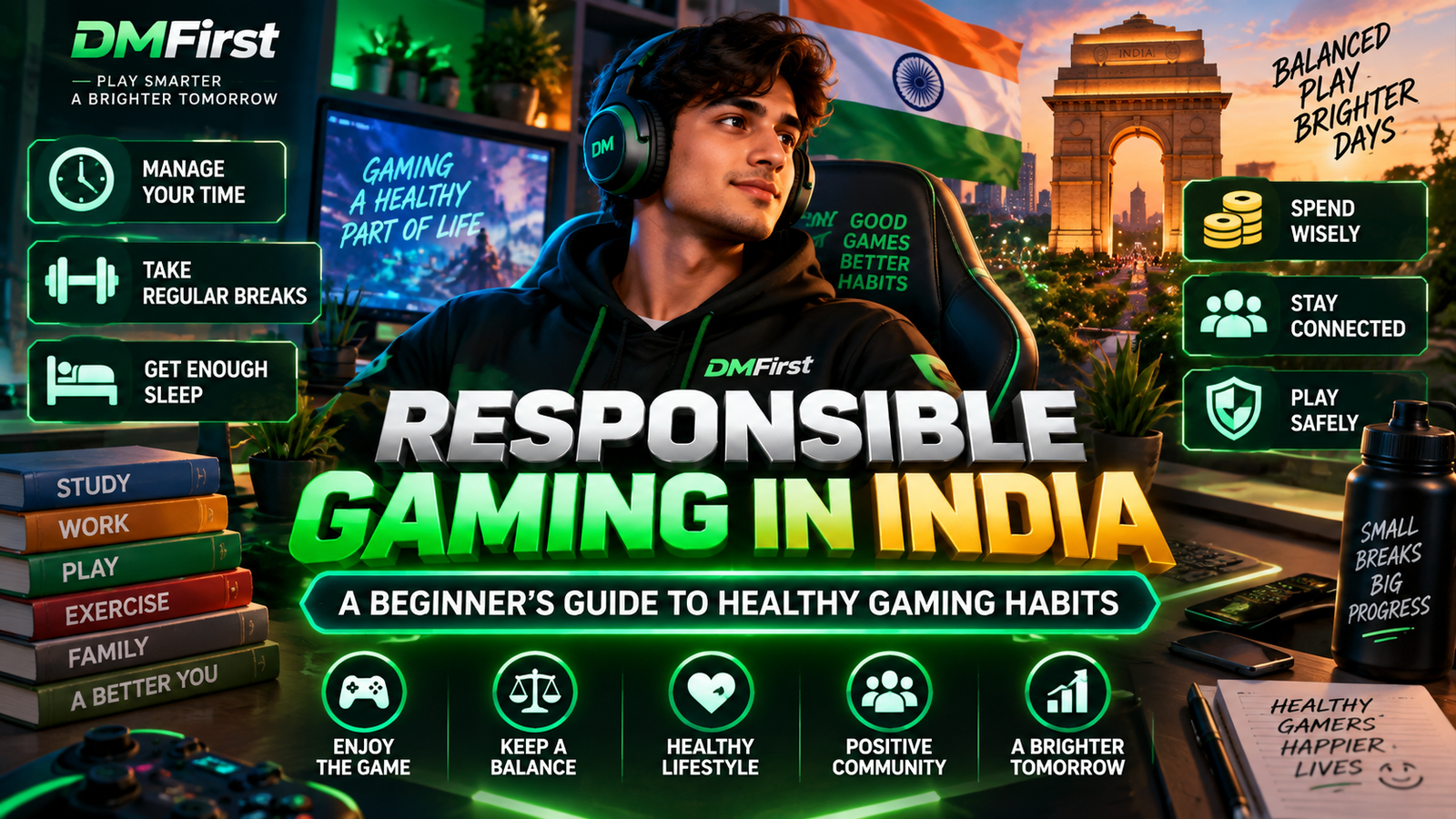
    Healthy gaming habits can include managing playing time, taking regular breaks, understanding optional purchases and maintaining time for sleep, education, work, physical activity and social interaction. This guide explains practical responsible gaming habits that beginners can use when playing online, mobile and competitive games.

    What Is Responsible Gaming?

    Responsible gaming refers to maintaining healthy and balanced habits while playing video games. It involves managing gaming time, understanding spending, taking regular breaks and making sure gaming does not consistently interfere with everyday responsibilities.

    Responsible gaming can apply to different forms of digital gaming, including mobile games, PC and console games, multiplayer titles and competitive gaming. The goal is not to avoid gaming, but to keep it as a balanced form of entertainment.

    Readers who are new to digital gaming can explore our online gaming in India guide to learn more about online games, common game categories and basic gaming practices.

    Why Responsible Gaming in India Matters

    Video games can provide entertainment, competition and opportunities to interact with other players. However, long gaming sessions without sufficient breaks can reduce the time available for sleep, physical activity, education, work and other everyday activities.

    Healthy gaming habits can help players manage their time more effectively and maintain a better balance between gaming and other responsibilities. They can also encourage players to pay attention to their spending and recognize when gaming habits may need to be adjusted.

    Different players have different routines, so responsible gaming does not require one fixed schedule. The important principle is maintaining a balance that allows gaming to remain an enjoyable part of everyday life.

    Managing Your Gaming Time

    Time management is one of the simplest ways to develop healthier gaming habits. Players can plan gaming sessions around their other responsibilities instead of allowing gaming to determine their entire daily schedule.

    Set Reasonable Gaming Limits

    Players can decide in advance how much time they want to spend gaming during a session or day. Setting a reasonable limit can make it easier to stop playing when other activities or responsibilities require attention.

    Take Regular Breaks

    Regular breaks can help players step away from the screen during longer gaming sessions. Breaks can be used to move around, rest the eyes, drink water or simply spend some time away from the game.

    Maintain a Healthy Sleep Schedule

    Gaming late into the night can reduce available sleep time when it becomes a regular habit. Players should consider their usual sleep schedule when deciding how long to continue a gaming session, particularly on days when they have work, school or other responsibilities the following morning.

    Balancing Gaming With Everyday Responsibilities

    Gaming is only one part of a player’s daily routine. Education, work, sleep, physical activity, relationships and other responsibilities should continue to receive appropriate time and attention.

    Planning gaming sessions after important tasks are completed can make it easier to maintain this balance. Players can also create simple routines that separate gaming time from study, work, meals and sleep.

    When gaming repeatedly causes important responsibilities to be delayed or ignored, it may be useful to reduce playing time and review the current gaming schedule.

    Managing Spending and In-Game Purchases

    Many games include optional purchases such as cosmetic items, additional content, subscriptions or other digital features. Players should understand what they are purchasing and how much it costs before completing a transaction.

    Setting a personal entertainment budget can help prevent gaming expenses from interfering with essential spending. Players should also check whether a purchase is a one-time payment or a recurring subscription.

    Purchase confirmations and transaction histories can be reviewed regularly to identify unexpected charges. Payment information should only be entered through official applications, websites or trusted payment systems.

    Healthy Habits for Mobile Gamers

    Smartphones make gaming highly accessible because players can carry their games almost anywhere. This convenience can make it especially useful for mobile players to pay attention to how frequently and how long they play.

    Mobile gamers can take regular screen breaks, monitor battery and device temperature, and avoid allowing gaming sessions to consistently replace sleep, exercise or other activities. Players should also consider mobile data usage when playing online games away from Wi-Fi networks.

    Readers who want to learn more about smartphone gaming, device requirements and online features can explore our mobile gaming in India guide.

    Responsible Habits in Competitive Gaming and Esports

    Competitive gaming can involve practice sessions, ranked matches, tournaments and team activities. Because competition may encourage players to spend more time improving their performance, maintaining a structured routine can be especially useful.

    Players can schedule practice sessions around other responsibilities and take regular breaks during longer periods of competitive play. Match results, rankings and competitive goals should also be kept in perspective so that gaming remains balanced with everyday activities.

    Readers interested in organized competitive gaming can learn more through our esports in India guide.

    Players who participate in ranked matches and other competitive formats can also explore our competitive gaming in India guide to understand competitive play, rankings, tournaments and the skills involved.

    Online Safety and Responsible Gaming

    Responsible gaming also includes protecting accounts, personal information and online interactions. Players should use strong passwords, enable two-factor authentication when available and avoid sharing login credentials or verification codes with other users.

    Suspicious links, unofficial downloads and messages offering unusual rewards should be treated carefully. Privacy and communication settings can also help players manage who can contact them while gaming online.

    For a more detailed explanation of account security, privacy, downloads and multiplayer safety, read our online gaming safety in India guide.

    Responsible Gaming for Younger Players

    Younger players may benefit from additional guidance when developing gaming habits. Parents or guardians can review age ratings, communication settings, purchase controls and the amount of time spent playing games.

    Clear routines can help younger players understand when gaming is appropriate and when attention should be given to sleep, schoolwork, physical activity and other responsibilities.

    Parents or guardians can also encourage younger players to discuss uncomfortable interactions, suspicious messages or unexpected purchase requests encountered while gaming online.

    When to Review Your Gaming Habits

    Gaming habits can change over time, particularly when players start a new game, participate in competitive events or spend more time playing with friends. Reviewing gaming routines occasionally can help players determine whether gaming remains balanced with other parts of everyday life.

    Players may want to reconsider their routine when gaming consistently reduces sleep, delays important responsibilities or results in spending beyond their planned entertainment budget. Taking a temporary break or reducing gaming time can help create space for other activities.

    Simple adjustments such as setting clearer time limits, scheduling breaks and planning gaming sessions around important responsibilities can help maintain healthier gaming habits.

    Frequently Asked Questions

    1. What is responsible gaming?

    Responsible gaming means maintaining healthy and balanced habits while playing video games, including managing gaming time, taking breaks, understanding spending and keeping everyday responsibilities in balance.

    2. Why is responsible gaming important?

    Responsible gaming can help players maintain a healthier balance between gaming and activities such as sleep, education, work, physical activity and social interaction.

    3. How long should a gaming session be?

    There is no single gaming-session length that is appropriate for everyone. Players should consider their responsibilities, routines and overall screen time while taking regular breaks during longer sessions.

    4. How can players manage spending in games?

    Players can set a personal entertainment budget, understand prices before purchasing, check whether payments are recurring and regularly review their transaction history.

    5. How can mobile gamers develop healthier gaming habits?

    Mobile gamers can set reasonable playing limits, take regular screen breaks and avoid allowing gaming to consistently replace sleep, exercise, work, education or other important activities.

    6. When should players review their gaming habits?

    Players may want to review their gaming habits when gaming consistently interferes with sleep or responsibilities, or when gaming expenses regularly exceed their planned entertainment budget.

    Final Thoughts

    Responsible gaming in India involves maintaining a healthy balance between gaming and everyday life. Managing playing time, taking regular breaks and understanding optional purchases can help players develop more sustainable gaming habits.

    Responsible gaming also includes maintaining account security, protecting personal information and approaching competitive gaming with a balanced mindset. Different players have different routines, so healthy gaming habits should be adapted to individual circumstances and responsibilities.

    For more gaming insights, guides and updates, visit DMFirst to explore more information about online gaming, mobile gaming, esports and gaming safety.

  • Online Gaming Safety in India: A Complete Guide for Beginners

    Online Gaming Safety in India: A Complete Guide for Beginners

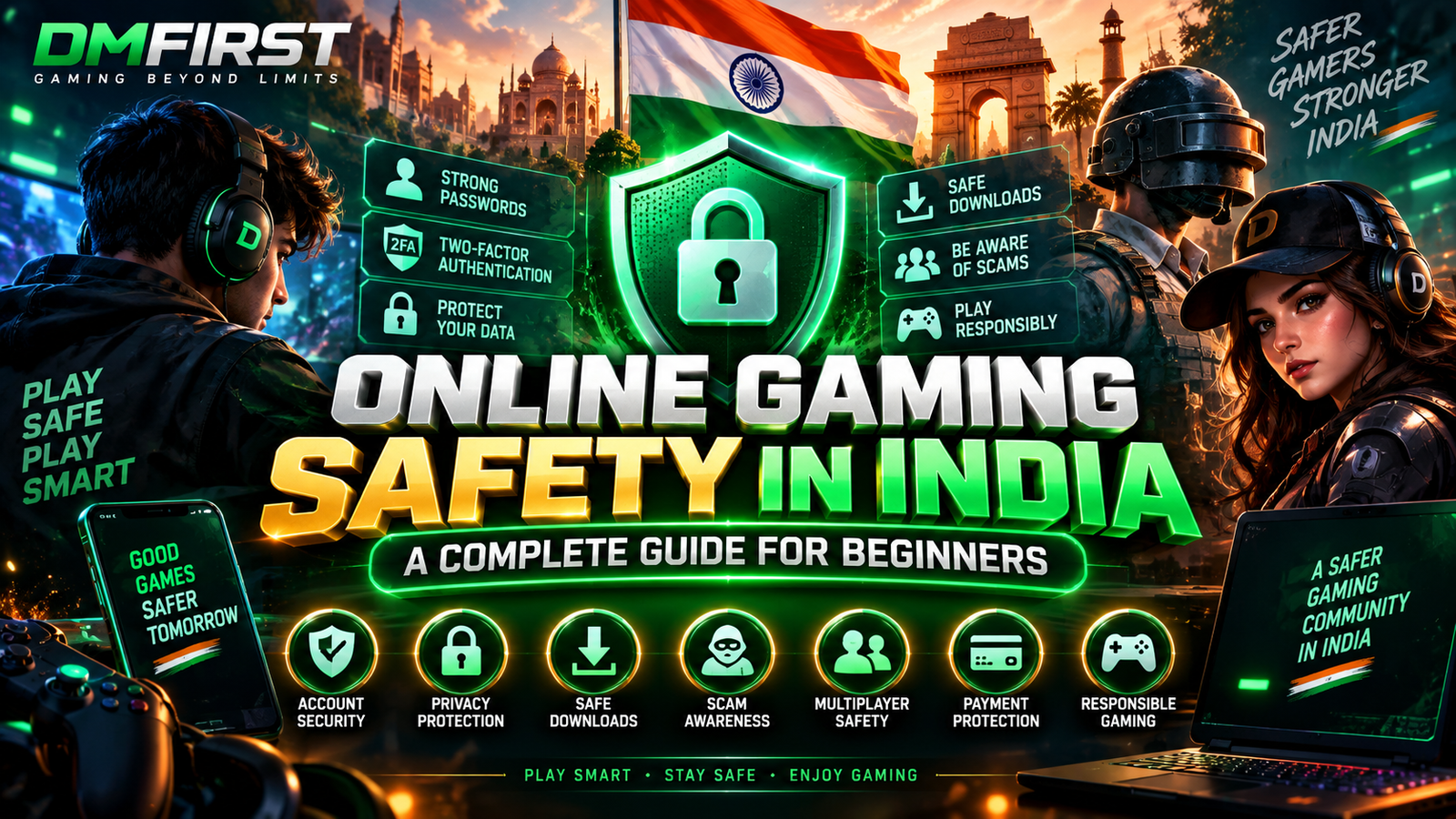
    Online gaming safety in India is important for players who use smartphones, computers and consoles to connect with games and other players through the internet. Online gaming accounts can contain personal information, communication features and payment options, making good security and privacy habits important for beginners.

    Players can reduce common online risks by protecting their accounts, downloading games from trustworthy sources and being careful when interacting with unfamiliar users. This guide explains account security, privacy, suspicious links and downloads, multiplayer safety, payments and responsible gaming practices.

    What Is Online Gaming Safety?

    Online gaming safety refers to the practices players use to protect their accounts, personal information, devices and online interactions while playing games connected to the internet. These practices can include account security, privacy controls, safe downloads and careful communication with other players.

    Online games may use features such as player accounts, multiplayer communication, cloud saves and digital purchases. Understanding how these features work can help beginners recognize potential risks and make safer decisions while gaming online.

    Readers who are new to online gaming can first explore our online gaming in India guide for a broader introduction to online games and gaming categories.

    Why Online Gaming Safety in India Matters

    Gaming accounts can contain usernames, email addresses, game progress, purchase history and other account information. Some online games also allow players to communicate directly with people they do not know personally.

    Weak passwords, suspicious downloads, phishing links and attempts to obtain personal information can create unnecessary risks for players. Developing basic security habits can help protect both gaming accounts and the devices used to access them.

    Safety is especially important when a game includes multiplayer communication, digital purchases or links to other online services. Players should understand these features before sharing information or completing transactions.

    Protecting Your Gaming Accounts

    A gaming account should be protected in the same way as other important online accounts. Simple security practices can make it more difficult for unauthorized users to access an account.

    Use Strong and Unique Passwords

    Players should create strong passwords that are difficult to guess and avoid using the same password across multiple services. A compromised password from one service can create additional risks when the same login details are reused elsewhere.

    Enable Two-Factor Authentication

    Two-factor authentication, when available, adds another verification step when signing in to an account. This can provide additional protection even if someone obtains the account password.

    Protect Verification Codes and Login Details

    Passwords, one-time verification codes and account recovery information should not be shared with other players. Messages asking for login credentials or verification codes should be treated carefully, even when they appear to offer rewards or account benefits.

    Protecting Your Privacy While Gaming

    Online games can include profiles, friend lists, chat systems and other social features. Players should review privacy settings to understand what information is visible to other users and who can contact them.

    Personal details such as a home address, phone number, passwords, verification codes and payment information should not be shared with other players. Beginners should also be careful about sharing information that could be used to identify or access their other online accounts.

    Communication controls such as blocking, muting and reporting can help players manage unwanted interactions. When available, privacy settings should be adjusted according to the player’s preferred level of interaction.

    Safe Game Downloads and Updates

    Games and updates should be downloaded from official application stores, verified developers or other trustworthy sources. Unofficial downloads may contain modified software or files that create unnecessary security risks.

    Before installing a game, players can review the developer information, requested permissions and device requirements. Applications requesting permissions that appear unrelated to their features should be reviewed carefully.

    Smartphone users can learn more about device requirements and mobile gaming practices in our mobile gaming in India guide.

    Choosing trustworthy gaming services is another important part of online safety. Beginners can explore our online gaming platforms in India guide to learn more about platform types, developer information, account security, safe downloads and payment considerations.

    How to Recognize Gaming Scams and Suspicious Links

    Players may encounter messages or websites claiming to offer free rewards, premium items, account upgrades or other benefits. Offers that require passwords, verification codes or unusual account permissions should be treated carefully.

    Phishing attempts may use websites or messages designed to imitate legitimate gaming services. Before entering account information, players should check that they are using the official website, application or service associated with the game.

    Unexpected links and downloadable files sent through chats, gaming communities or social platforms should not be opened automatically. When an offer appears suspicious, players should verify the information through official game or developer channels instead.

    Staying Safe in Multiplayer Games

    Multiplayer games allow players to communicate, cooperate and compete with other people through the internet. These interactions can make games more social, but players should remain careful when communicating with people they do not know personally.

    Personal information, account credentials and payment details should not be shared through in-game chats or private messages. Players can use mute, block and report features when they encounter unwanted messages, harassment or suspicious behavior.

    Beginners who want to understand different multiplayer and competitive game categories can explore our types of online games guide.

    Gaming Payments and In-App Purchase Safety

    Some online games include optional purchases for digital items, subscriptions or additional content. Before completing a transaction, players should understand what they are purchasing, the price and whether the payment is a one-time charge or a recurring subscription.

    Payment information should only be entered through official applications, websites or trusted payment systems. Players should avoid sending payment details to other users or completing transactions through suspicious links received in messages.

    Reviewing purchase confirmations and account transaction history can help identify unexpected charges. When a device is shared with other people, additional purchase authentication can also help prevent unintended transactions.

    Online Gaming Safety for Younger Players

    Younger players may need additional guidance when using games that include online communication, purchases or interaction with unfamiliar users. Parents or guardians can review a game’s age rating, privacy settings and communication features before allowing younger players to participate.

    Parental controls can help manage features such as play time, purchases, downloads and communication depending on the device or gaming platform. Younger players should also understand that personal information, passwords and verification codes should not be shared with other users.

    Open communication about suspicious messages, uncomfortable interactions or unexpected purchase requests can help younger players recognize situations where they should ask a trusted adult for assistance.

    Responsible Gaming and Healthy Habits

    Online gaming can be an enjoyable form of entertainment, but players should maintain a healthy balance between gaming and everyday activities. Setting reasonable limits for gaming sessions and taking regular breaks can help prevent excessive play.

    Gaming should not consistently interfere with sleep, education, work, physical activity or other responsibilities. Players should also pay attention to how much time and money they spend on games, particularly when optional purchases or subscriptions are available.

    If gaming begins to interfere with daily routines or responsibilities, reducing playing time and reviewing gaming habits can help restore a healthier balance.

    Frequently Asked Questions

    1. What is online gaming safety?

    Online gaming safety refers to practices that help protect gaming accounts, personal information, devices and online interactions while using internet-connected games.

    2. How can players protect their gaming accounts?

    Players can use strong and unique passwords, enable two-factor authentication when available and avoid sharing passwords, verification codes or account recovery information.

    3. Is it safe to download games from unofficial websites?

    Downloading games from official application stores, verified developers or other trustworthy sources is generally safer than using unknown or unofficial download sources.

    4. How can players recognize gaming scams?

    Players should be cautious of messages or websites promising unusual rewards while requesting passwords, verification codes, payments or sensitive account information. Suspicious offers should be verified through official game or developer channels.

    5. How can players stay safe in multiplayer games?

    Players should protect personal information, review privacy settings and use mute, block or report features when they encounter suspicious or unwanted interactions.

    6. How can parents help younger players stay safe online?

    Parents or guardians can review age ratings, privacy settings, communication features, parental controls and purchase settings while encouraging younger players to report suspicious or uncomfortable interactions.

    Final Thoughts

    Online gaming safety in India starts with simple habits such as protecting account credentials, reviewing privacy settings and downloading games from trustworthy sources. Players should also remain careful when interacting with unfamiliar users or opening links received through gaming communities.

    Understanding payment features, multiplayer communication and common online risks can help beginners make more informed decisions. Responsible gaming habits are also important for maintaining a healthy balance between gaming and everyday responsibilities.

    For more gaming insights, guides and updates, visit DMFirst to explore more information about online gaming, mobile gaming, esports and gaming safety.