Category: Gaming

Gaming news, guides and updates from India and around the world.

  • Multiplayer Mobile Games: How Online Mobile Gaming Works

    Multiplayer Mobile Games: How Online Mobile Gaming Works

    Multiplayer mobile games allow players to connect and play with other people through smartphones and tablets. Instead of playing entirely against computer-controlled opponents, players can participate in shared online environments with friends, teammates or other players.

    These games can include cooperative adventures, competitive matches, racing, strategy, sports and many other experiences. Internet connectivity makes it possible for players using mobile devices to communicate, compete and participate in the same gaming environment.

    As smartphones become more capable, multiplayer experiences have become an increasingly important part of mobile gaming in India and the wider digital gaming ecosystem.

    What Are Multiplayer Mobile Games?

    Multiplayer mobile games are games designed for two or more players to participate in the same or connected gaming environment using mobile devices.

    Depending on the game, players may compete against one another or work together toward a shared objective.

    Some multiplayer games focus on short matches, while others provide larger environments where players can continue progressing over longer periods.

    The multiplayer experience may include features such as matchmaking, rankings, teams, friend lists and communication systems.

    These features distinguish multiplayer games from many traditional single-player experiences.

    How Multiplayer Mobile Games Work

    Most online multiplayer mobile games rely on an internet connection to exchange information between a player’s device and online game servers.

    When players perform actions inside a game, information may be transmitted between their devices and the game’s servers. This allows the game to coordinate what different players see and experience.

    The exact technical structure varies between games.

    Some games connect a small number of players for short matches, while others support larger communities and persistent online environments.

    Stable connectivity can be important because delays or interruptions may affect the multiplayer experience.

    Different Types of Multiplayer Mobile Games

    Multiplayer gaming covers many different genres.

    Competitive games may place players against each other to determine a winner, while cooperative games encourage players to work together.

    Strategy games can require players to manage resources or make tactical decisions. Racing and sports games may allow players to compete directly in matches.

    Other multiplayer experiences focus more heavily on exploration, communication or social interaction.

    This variety is one reason multiplayer gaming has become an important category among the many types of mobile games available to players.

    The best type of multiplayer experience depends on a player’s interests, available time and preferred gameplay style.

    Competitive and Cooperative Multiplayer Games

    One useful way to understand multiplayer games is to separate competitive and cooperative experiences.

    In competitive games, players or teams compete against each other. Matches may include rankings, objectives, leaderboards or other systems used to measure performance.

    Cooperative games work differently.

    Instead of trying to defeat each other, players collaborate to complete objectives or progress through a game.

    Some mobile games combine both approaches. Players may cooperate with teammates while simultaneously competing against another team.

    This combination of teamwork and competition can make multiplayer games more interactive than traditional single-player experiences.

    Matchmaking in Mobile Games

    Many multiplayer mobile games use matchmaking systems to connect players.

    A matchmaking system attempts to create a game session by selecting players who are available to participate.

    Depending on the game, matchmaking may consider factors such as game mode, location, connection quality, player progression or skill-related information.

    Different games use different systems, so matchmaking experiences can vary considerably.

    Once a match is created, players enter the same gaming session and participate according to the rules of that particular game.

    Matchmaking makes it easier for players to find opponents or teammates without manually organizing every game.

    Communication and Social Features

    Multiplayer mobile games are often social experiences.

    Games may provide text chat, voice communication, friend lists, teams, clans or other community features.

    These systems can help players coordinate during matches and stay connected with people they regularly play with.

    The social side of gaming can also extend beyond the game itself. Players may participate in gaming communities, watch gaming content or discuss strategies through other online platforms.

    Our guide to multiplayer gaming in India provides a broader look at multiplayer experiences and how connected gaming allows players to interact online.

    Players should still be careful when communicating with people they do not know personally.

    Smartphones and Multiplayer Gaming

    Smartphone technology has significantly expanded what mobile games can offer.

    Modern mobile devices can support more complex graphics, faster processing and increasingly sophisticated online features.

    Screen quality, processor performance, available memory, storage capacity and network connectivity can all influence the gaming experience.

    More demanding multiplayer games may require stronger hardware than simple casual games.

    Players should therefore review a game’s device requirements before installation.

    The development of gaming technology in India also helps explain how improvements in devices and connectivity are changing digital gaming experiences.

    Internet Connection and Online Gameplay

    A reliable internet connection is particularly important for many multiplayer mobile games.

    Because information is continuously exchanged during online gameplay, network delays can sometimes affect how quickly actions appear inside a game.

    Players commonly encounter terms such as latency or ping when discussing online gaming performance.

    Lower and more stable latency can generally provide a more responsive online experience, although actual performance also depends on the game, device, network and server infrastructure.

    Players using mobile data should also be aware that online gaming can consume data.

    The amount varies significantly between games and activities, so users should monitor their data usage when necessary.

    Multiplayer Mobile Games and Esports

    Some multiplayer games also develop competitive communities.

    When competition becomes organized through structured matches, tournaments or leagues, certain games can become part of the esports ecosystem.

    Mobile devices have made competitive gaming accessible to players who may not use dedicated gaming computers or consoles.

    Our guide to mobile esports in India explores this part of the gaming ecosystem in greater detail.

    However, not every multiplayer game is an esports title.

    Many multiplayer games are designed primarily for entertainment, social interaction or casual competition rather than organized competitive play.

    Multiplayer Mobile Games and Gaming Communities

    Online communities can become an important part of multiplayer gaming.

    Players may form teams, exchange strategies, discuss updates and share gaming experiences.

    Communities can also help beginners understand game mechanics or discover different ways to play.

    Content creators and gaming videos can further expand these communities by providing tutorials, entertainment and discussions about particular games.

    These social connections demonstrate how multiplayer gaming can extend beyond individual matches.

    At the same time, players should use community and communication features responsibly, particularly when interacting with unfamiliar people online.

    Safety in Multiplayer Mobile Games

    Because multiplayer games involve online accounts and interaction with other users, security should remain a priority.

    Players should use strong and unique passwords for gaming accounts. Two-factor authentication can provide additional protection when supported.

    Suspicious links, unofficial game downloads and messages requesting passwords or verification codes should be treated carefully.

    Players should also review privacy and communication settings to understand who can contact them or view their information.

    Our mobile gaming safety guide provides additional information about protecting mobile gaming accounts, devices and personal information.

    Account security is especially important when a gaming account contains personal information, purchases or valuable in-game progress.

    Privacy and Communication Settings

    Privacy controls can help players manage their online presence.

    Depending on the game, users may be able to control who can send friend requests, communicate with them or view profile information.

    Players should avoid sharing unnecessary personal information through public chats or gaming profiles.

    Information such as passwords, verification codes and financial details should never be shared with other players.

    Younger players may require additional guidance from parents or guardians regarding communication settings, age ratings and online interactions.

    Understanding these settings can make multiplayer environments safer and more comfortable.

    Healthy Multiplayer Gaming Habits

    Multiplayer games can encourage players to continue playing because matches, teammates and competitive systems create ongoing activities.

    For that reason, maintaining balanced gaming habits is important.

    Players can set reasonable limits for gaming sessions and take regular breaks, especially during longer periods of play.

    Gaming should not consistently interfere with sleep, study, work, exercise or important daily responsibilities.

    Players can learn more about maintaining healthier gaming habits in our guide to responsible gaming in India.

    A balanced approach can help keep multiplayer gaming enjoyable without allowing it to dominate other activities.

    Multiplayer Mobile Games and Mobile Gaming Trends

    Multiplayer experiences are closely connected to broader changes in mobile gaming.

    Better smartphones, faster connectivity and increasingly sophisticated online features allow developers to create more interactive mobile experiences.

    Social features, competitive modes and gaming communities are also becoming more closely connected.

    Our guide to mobile gaming trends in India explores these developments and explains how smartphones, multiplayer experiences, esports and technology are shaping mobile gaming.

    As technology continues to develop, multiplayer features may become even more integrated into mobile games.

    Choosing a Multiplayer Mobile Game

    Players should consider several factors before choosing a multiplayer game.

    First, the game should be compatible with the device being used. Hardware requirements, storage space and internet connectivity can affect performance.

    Players should also consider what type of experience they want.

    Someone interested in teamwork may prefer cooperative games, while players who enjoy competition may prefer ranked or team-based matches.

    Game ratings, developer information, privacy policies and application permissions can also provide useful information before installation.

    Games should preferably be downloaded from official application stores or verified developer sources.

    The Future of Multiplayer Mobile Gaming

    The future of multiplayer mobile gaming will likely be influenced by improvements in smartphones, connectivity and gaming technology.

    More capable devices can support increasingly detailed games, while network improvements can make connected experiences more responsive.

    Multiplayer features may also become more closely connected with esports, content creation and online gaming communities.

    However, technological development is only one part of the experience.

    Account security, privacy controls, healthy gaming habits and responsible communication will remain important as multiplayer environments become more connected.

    The combination of technology and social interaction will continue to shape how players experience multiplayer gaming on mobile devices.

    Final Thoughts

    Multiplayer mobile games have transformed smartphones into connected gaming platforms where players can compete, cooperate and communicate with others.

    Different genres provide different experiences, ranging from casual cooperative gameplay to competitive matches and mobile esports.

    Understanding matchmaking, internet requirements, device performance, privacy settings and account security can help players make more informed decisions when exploring multiplayer games.

    For more information about mobile games, esports, gaming technology and digital gaming in India, explore the latest gaming guides from DMFirst.
  • Mobile Gaming Trends in India: What Is Shaping the Future?

    Mobile Gaming Trends in India: What Is Shaping the Future?

    Mobile gaming trends in India continue to evolve as smartphones, internet connectivity and digital entertainment become increasingly integrated into everyday life. Mobile devices have made gaming more accessible, allowing players to explore different genres without requiring dedicated gaming hardware.

    From casual games and multiplayer experiences to competitive gaming and esports, smartphones now support a wide range of gaming experiences. Improvements in mobile technology are also changing how games are developed, distributed and experienced.

    Understanding these trends can help players and readers see how mobile gaming fits into India’s broader digital gaming ecosystem.

    Mobile Gaming Trends in India

    One of the most noticeable mobile gaming trends in India is the increasing variety of experiences available through smartphones.

    Mobile gaming is no longer limited to simple games designed for short sessions. Modern devices can support multiplayer environments, competitive titles, strategy games, racing experiences and increasingly sophisticated graphics.

    Players interested in the broader development of this ecosystem can explore our guide to mobile gaming in India, which explains how smartphones have become an important part of digital entertainment.

    Another important trend is accessibility. Smartphones are widely used for communication, entertainment and online services, making them a convenient platform for discovering games.

    As devices continue to improve, developers can create increasingly diverse experiences for mobile audiences.

    Smartphones Are Driving Mobile Gaming Growth

    Smartphone development has played an important role in the evolution of mobile gaming.

    Modern devices offer faster processors, improved graphics capabilities, larger displays and better connectivity. These improvements allow mobile games to provide experiences that previously required more powerful gaming hardware.

    Performance is not the only factor.

    Mobile devices also make gaming convenient. Players can access games from almost anywhere and choose experiences that match the amount of time they have available.

    Some people prefer short casual sessions, while others participate in longer multiplayer or competitive experiences.

    This variety has helped smartphones become an important gateway into gaming.

    Readers who want to understand the different experiences available can explore our guide to the types of mobile games, including casual, puzzle, strategy, multiplayer, racing and competitive games.

    Multiplayer Gaming Is Becoming More Social

    Another important development is the growth of connected multiplayer experiences.

    Instead of playing only against computer-controlled opponents, mobile players can interact with friends, teammates and other players through online environments.

    Multiplayer features can include team-based gameplay, competitive matches, rankings, communication systems and online communities.

    These features transform gaming from an individual activity into a more social digital experience.

    Our guide to multiplayer gaming in India explains how online connectivity allows players to participate in shared gaming environments.

    As internet infrastructure and smartphone performance continue to develop, social and multiplayer features are likely to remain an important part of mobile gaming.

    Mobile Esports Continues to Develop

    Competitive gaming has also become increasingly connected to mobile devices.

    Some mobile games provide structured competitive environments where players can develop skills, participate in tournaments and follow professional competitions.

    This has contributed to the development of mobile esports in India, where smartphones provide another way for players and audiences to participate in competitive gaming.

    Mobile esports can also connect several parts of the gaming ecosystem.

    Players participate in competitions, viewers follow tournaments, creators produce gaming content and online communities discuss teams, strategies and events.

    As competitive mobile games continue to develop, esports may remain an important part of the broader mobile gaming landscape.

    Casual Mobile Games Remain Accessible

    Not every mobile player is interested in competitive gaming.

    Casual games remain an important part of the mobile ecosystem because they are generally designed to be accessible and easy to understand.

    Puzzle games, simple strategy experiences and other casual titles can often be played during shorter sessions.

    This flexibility makes them suitable for players who may not want to commit significant amounts of time to a single gaming session.

    The variety between casual and competitive experiences also demonstrates why mobile gaming can appeal to different types of players.

    Instead of following one gaming style, users can choose games based on their interests, available time and preferred level of complexity.

    Gaming Technology Is Improving Mobile Experiences

    Technology is another major factor shaping mobile gaming trends.

    Smartphone processors, graphics technology, cloud infrastructure, artificial intelligence and network connectivity continue to influence how games operate.

    Faster hardware can support more detailed environments and smoother gameplay, while improved connectivity can make online multiplayer experiences more practical.

    Cloud technologies may also influence how gaming content is distributed and accessed.

    Artificial intelligence can be used in different areas of game development, including gameplay systems, testing and personalized experiences.

    Our overview of gaming technology in India explores several technologies that are influencing the wider gaming ecosystem.

    These developments do not affect only mobile gaming. They are part of a broader transformation across gaming platforms and digital entertainment.

    Gaming Communities and Content Creators

    Gaming increasingly extends beyond the game itself.

    Players can watch gaming videos, follow livestreams, discuss strategies and participate in communities built around particular games or genres.

    Content creators can help audiences discover new games, understand gameplay mechanics and follow developments within gaming communities.

    Social platforms also make it easier for players to communicate outside individual games.

    This relationship between games, creators and communities has made gaming a broader form of digital entertainment rather than simply an activity that takes place inside an application.

    Community participation can be particularly important for multiplayer and esports audiences, where discussion and shared experiences are often part of the overall gaming culture.

    Online Safety and Account Protection

    As mobile games become more connected, security and privacy become increasingly important.

    Many games use online accounts, multiplayer communication, application permissions and sometimes digital payment systems. Players should therefore understand basic safety practices.

    Strong and unique passwords can help protect gaming accounts. Two-factor authentication can provide an additional layer of protection when available.

    Players should also be cautious about suspicious links, unofficial downloads and messages requesting login information.

    Our mobile gaming safety guide explains practical steps players can take to protect their devices, accounts and personal information.

    Downloading games from trusted sources and reviewing application permissions can also reduce unnecessary security risks.

    Responsible Mobile Gaming Habits

    Healthy gaming habits are another important part of the mobile gaming experience.

    Because smartphones are easily accessible throughout the day, players may find themselves switching between gaming and other activities frequently.

    Setting reasonable gaming schedules can help maintain balance with work, study, sleep, exercise and social activities.

    Taking breaks during longer gaming sessions can also reduce fatigue.

    Gaming should remain one part of a balanced lifestyle rather than consistently interfering with important daily responsibilities.

    Players interested in this topic can read our guide to responsible gaming in India for additional information about healthier gaming habits.

    Mobile Gaming and India’s Wider Gaming Industry

    Mobile gaming is closely connected to the broader gaming industry in India.

    Developers, esports organizations, content creators, technology companies and gaming communities all contribute to the wider ecosystem.

    As mobile audiences grow, businesses may continue exploring new ways to develop games, distribute content and connect with players.

    At the same time, technological development can create opportunities for new gaming experiences.

    The relationship between mobile gaming, esports, online communities and technology shows how different parts of the industry can influence one another.

    This makes mobile gaming an important area to watch when studying the development of India’s gaming ecosystem.

    The Future of Mobile Gaming in India

    The future of mobile gaming in India will likely be influenced by several developments happening at the same time.

    Smartphones are becoming more capable, connectivity continues to improve and players have access to increasingly diverse gaming experiences.

    Multiplayer gaming, esports, casual games and emerging technologies can all contribute to how the ecosystem develops.

    However, future growth is not only about technology.

    Security, privacy, responsible gaming and accessible game design will also remain important as more gaming experiences become connected to online accounts and communities.

    The most significant mobile gaming trends in India may therefore come from the interaction between technology, players, developers and digital communities rather than from one individual type of game.

    Final Thoughts

    Mobile gaming trends in India show how quickly smartphone-based entertainment continues to evolve.

    Better mobile hardware, multiplayer connectivity, competitive gaming, esports, casual experiences and emerging gaming technologies are creating more ways for players to participate in digital gaming.

    At the same time, players should continue paying attention to account security, privacy and healthy gaming habits as mobile experiences become increasingly connected.

    For more beginner-friendly information about mobile gaming, esports, gaming technology and digital entertainment, explore the latest gaming guides from DMFirst.
  • Types of Mobile Games: Popular Gaming Genres Explained

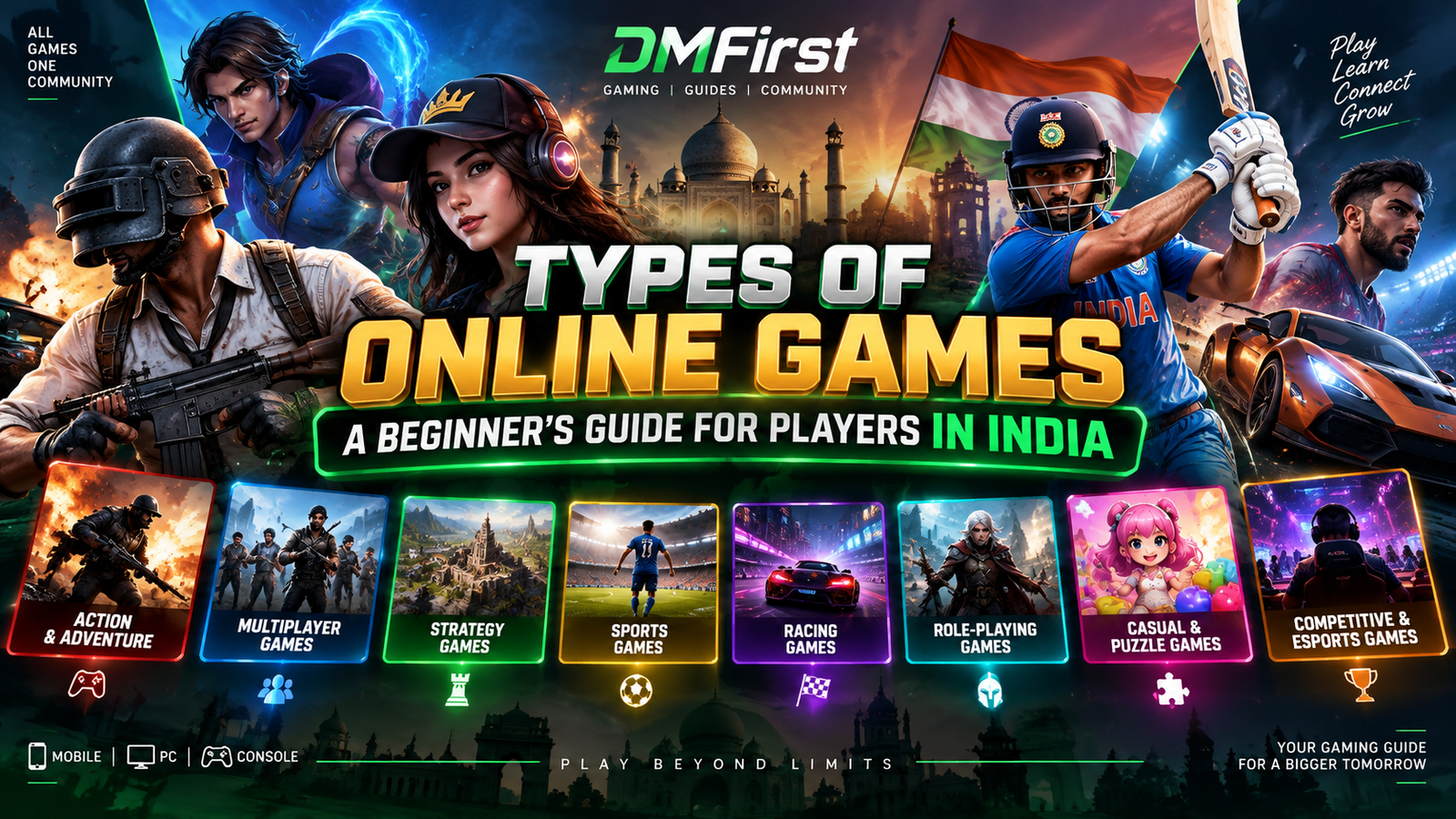
    Types of Mobile Games: Popular Gaming Genres Explained

    Types of Mobile Games: Popular Gaming Genres Explained

    Mobile gaming offers a wide variety of experiences for different types of players. Some people prefer simple games that can be enjoyed for a few minutes, while others enjoy competitive multiplayer games that require strategy, teamwork and practice.

    Understanding the different types of mobile games can make it easier for players to discover genres that match their interests and preferred style of play.

    From casual and puzzle games to strategy, racing and competitive titles, mobile devices provide access to many different gaming experiences.

    Understanding the Different Types of Mobile Games

    Mobile games can be categorized according to their gameplay mechanics, objectives and player interactions.

    Some games focus primarily on individual progression, while others allow players to compete or cooperate online.

    A single game can also combine several genres, meaning these categories are useful descriptions rather than strict boundaries.

    For a broader introduction to smartphone gaming, explore our mobile gaming in India guide.

    Why Mobile Game Genres Matter

    Genres help players understand what kind of experience they can expect from a game.

    Someone interested in competition may prefer multiplayer or action games, while another player may enjoy puzzles or simulation games.

    Understanding genres can therefore make game discovery easier.

    1. Casual Mobile Games

    Casual games are generally designed to be accessible and relatively easy to understand.

    They often feature straightforward controls and can be suitable for shorter gaming sessions.

    Puzzle games, simple simulations and other accessible titles can fall within this category.

    Our guide to casual gaming in India explains casual gaming in more detail.

    Who Might Enjoy Casual Games?

    Casual games can appeal to both new and experienced players.

    They may be particularly suitable for people who want entertainment without spending significant time learning complicated controls or mechanics.

    2. Puzzle Games

    Puzzle games challenge players to solve problems, recognize patterns or complete specific objectives.

    Some puzzle games introduce simple mechanics before gradually increasing their difficulty.

    Because many puzzles can be completed in relatively short sessions, this genre is common on mobile devices.

    Different Puzzle Mechanics

    Puzzle games can use matching systems, logic challenges, word puzzles, physics-based mechanics and many other formats.

    This variety allows players to choose experiences that match their interests.

    3. Multiplayer Mobile Games

    Multiplayer games allow two or more players to participate in the same gaming experience.

    Depending on the game, players may compete against each other or cooperate toward a shared objective.

    Online multiplayer features have also helped gaming become increasingly social.

    Learn more in our guide to multiplayer gaming in India.

    Cooperative and Competitive Multiplayer

    Cooperative games encourage players to work together.

    Competitive multiplayer games instead place players or teams against one another.

    Some games include both modes, allowing players to choose different experiences.

    4. Strategy Games

    Strategy games emphasize planning and decision-making.

    Players may need to manage resources, build structures, develop units or decide how to respond to changing situations.

    Some strategy games are turn-based, while others operate in real time.

    Strategy Games Can Reward Planning

    Success in strategy games often depends on understanding game mechanics and making effective decisions.

    This can create a different experience from games that primarily emphasize quick reactions.

    5. Simulation Games

    Simulation games recreate or represent different activities, environments or systems.

    Players might manage a virtual city, operate a business, build environments or participate in other simulated experiences.

    Some simulations aim for realism, while others use simplified or imaginative mechanics.

    Creative and Management Experiences

    Many simulation games allow players to develop something over time.

    This can make the genre appealing to people who enjoy progression, customization and management.

    6. Racing Games

    Racing games focus on speed, vehicles and competition.

    Mobile racing experiences can range from simple arcade-style gameplay to more detailed driving simulations.

    Controls may use touchscreen buttons, virtual steering systems or device motion sensors.

    Arcade vs Simulation Racing

    Arcade racing generally emphasizes accessible and fast-paced gameplay.

    Simulation-style racing may place greater emphasis on realistic vehicle handling and driving mechanics.

    7. Sports Games

    Sports games recreate activities inspired by real-world sports.

    Depending on the title, players may control individual athletes, entire teams or management systems.

    Mobile sports games can range from simple casual experiences to more detailed competitive games.

    Competitive Sports Gaming

    Some sports games include online multiplayer modes that allow players to compete against other users.

    This can combine traditional sports themes with online gaming communities.

    8. Action Games

    Action games generally emphasize movement, timing and quick decision-making.

    This broad category can include platforming, combat and other gameplay styles.

    Many action games also incorporate mechanics from other genres.

    Action and Multiplayer Features

    Some action games include multiplayer modes where players compete or cooperate.

    As a result, a title may simultaneously belong to action and multiplayer categories.

    9. Competitive Mobile Games

    Competitive mobile games emphasize competition between players or teams.

    These titles may include rankings, matchmaking systems and organized competitions.

    Some competitive games can also develop communities around tournaments and esports.

    Readers interested in competitive gaming can explore our mobile esports in India guide.

    Competitive Gaming and Esports

    Not every competitive game is necessarily an esport.

    Esports generally involves more organized forms of competitive gaming, including tournaments, teams and spectators.

    Our broader esports in India guide explains this ecosystem in more detail.

    10. Social and Community-Based Games

    Some mobile games place a strong emphasis on interaction between players.

    Features may include teams, guilds, friend systems, communication tools or community events.

    These features can turn games into social spaces where players interact beyond individual gameplay.

    Gaming Communities

    Communities can extend beyond the game itself.

    Players may discuss strategies, updates and gaming experiences through social media, livestreams and other online communities.

    How Mobile Game Genres Overlap

    Modern games frequently combine multiple genres.

    A strategy game may contain multiplayer competition. A racing game may include social features. A casual game may include online leaderboards.

    Because of this, genre labels should help describe gameplay rather than create strict boundaries.

    The diversity of genres is one reason mobile gaming represents an important part of the wider Indian gaming market.

    Choosing the Right Type of Mobile Game

    Players can consider several factors when choosing a game.

    These include preferred gameplay style, available time, device requirements, online features and whether the game includes optional purchases or subscriptions.

    Beginners may find it useful to try several genres before deciding which experiences they enjoy most.

    Mobile Gaming Safety

    Regardless of genre, players should pay attention to account security and privacy.

    Strong passwords, appropriate privacy settings and caution around unfamiliar links can help reduce online risks.

    Our online gaming safety in India guide provides more information about protecting gaming accounts.

    Healthy Mobile Gaming Habits

    Different mobile games are designed to keep players engaged in different ways.

    Players should still manage their gaming time and maintain a healthy balance between games and other daily activities.

    For additional guidance, read our responsible gaming in India guide.

    Types of Mobile Games and Gaming Trends

    The range of mobile game genres continues to evolve alongside smartphones, connectivity and player preferences.

    Developers can combine different mechanics and technologies to create new gaming experiences.

    These changes form part of broader gaming trends in India and demonstrate how mobile gaming continues to evolve.

    Explore Mobile Gaming with DMFirst

    DMFirst publishes informational content about mobile gaming, esports, multiplayer experiences, online safety and developments across India’s gaming ecosystem.

    Readers can explore our guides to learn more about different games, technologies and gaming trends.

    Final Thoughts

    The many types of mobile games provide players with a wide range of entertainment choices.

    Casual games can provide accessible experiences, while multiplayer, strategy, racing, sports and competitive titles offer different forms of gameplay.

    Understanding these categories can help players identify gaming experiences that better match their interests, available time and preferred way of playing.

    The growing variety of mobile game genres is also contributing to the development of mobile gaming in India, giving players access to casual, multiplayer, strategy and competitive experiences.

    Frequently Asked Questions

    What are the main types of mobile games?

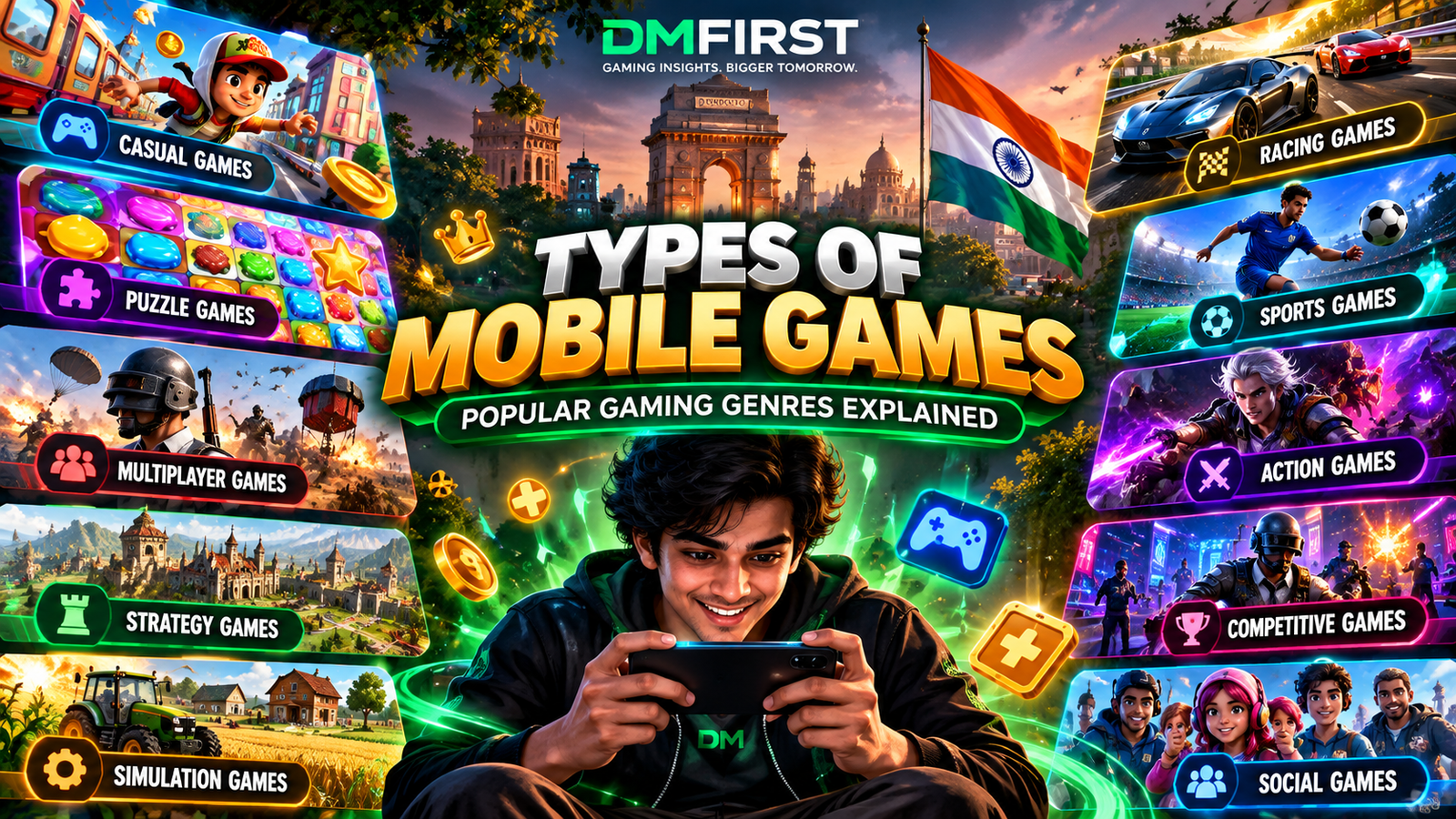
    Common categories include casual, puzzle, multiplayer, strategy, simulation, racing, sports, action and competitive games.

    What are casual mobile games?

    Casual mobile games are generally designed to be accessible, easy to understand and suitable for relatively short gaming sessions.

    Can a mobile game belong to multiple genres?

    Yes. Modern mobile games frequently combine mechanics from several genres, such as strategy, multiplayer and action.

    Are all competitive mobile games esports?

    No. A game can include competitive features without having an organized esports ecosystem.

  • Casual Gaming in India: Why It Is Growing Among Mobile Players

    Casual Gaming in India: Why It Is Growing Among Mobile Players

    Gaming does not always require long sessions, complex controls or highly competitive gameplay.

    For many players, games are a convenient form of entertainment that can be enjoyed during short breaks or free time. This accessibility has helped casual gaming in India become an important part of the broader mobile gaming ecosystem.

    From puzzle and strategy games to simple multiplayer experiences, casual games can appeal to players with different interests and levels of gaming experience.

    What Is Casual Gaming?

    Casual gaming generally refers to games designed to be relatively easy to understand and convenient to play.

    Many casual games allow players to begin playing without spending significant time learning complicated mechanics.

    Sessions can often be short, although players may choose to continue playing for longer periods.

    Casual games have become an accessible part of mobile gaming in India, particularly for players who prefer simple gameplay and shorter gaming sessions.

    Casual Games vs Competitive Games

    Casual and competitive gaming can provide different experiences.

    Competitive games often place greater emphasis on rankings, advanced mechanics, teamwork or direct competition between players.

    Casual games generally focus more on accessibility and entertainment, although some casual titles can still contain competitive or multiplayer features.

    Neither format is necessarily better. Different players simply prefer different gaming experiences.

    Why Casual Gaming in India Is Accessible

    One reason casual gaming can reach broad audiences is accessibility.

    Many games can be played on smartphones that people already use for communication, entertainment and other digital activities.

    Players therefore may not need dedicated gaming hardware to explore casual games.

    This connection between smartphones and gaming is also discussed in our mobile gaming in India guide.

    Simple Gameplay

    Casual games often introduce their mechanics quickly.

    Clear objectives and straightforward controls can make it easier for new players to understand how a game works.

    This can be particularly useful for people who do not consider themselves experienced gamers.

    Short Gaming Sessions

    Some casual games are designed around activities that can be completed relatively quickly.

    This makes them suitable for players who prefer shorter entertainment sessions rather than spending long periods playing at once.

    Players can still decide how much time they want to spend with a particular game.

    Popular Types of Casual Games

    Casual gaming includes many different genres.

    The exact definition can vary, but several types of games commonly provide accessible experiences.

    Readers can also explore our broader guide to the types of online games.

    Puzzle Games

    Puzzle games challenge players to solve patterns, problems or other interactive tasks.

    Their mechanics can range from very simple puzzles to increasingly difficult challenges.

    Strategy and Simulation Games

    Some strategy and simulation games use accessible mechanics while allowing players to build, manage or develop virtual environments.

    These games can provide longer-term progression while still being suitable for relatively short sessions.

    Racing and Sports Games

    Racing and sports-inspired games can offer straightforward gameplay for casual audiences.

    Some titles focus on quick matches, while others provide more detailed experiences.

    Multiplayer Casual Games

    Casual games do not have to be single-player experiences.

    Some allow friends or other players to interact, compete or cooperate online.

    Our guide to multiplayer gaming in India explains multiplayer experiences in greater detail.

    Smartphones and Mobile Casual Gaming

    Smartphones have changed how people access digital entertainment.

    Instead of requiring specialized hardware, many games can be downloaded and played directly on mobile devices.

    App stores also make it relatively easy for users to discover different genres and gaming experiences.

    Improving Smartphone Technology

    Modern smartphones continue to improve in areas such as processing power, displays, storage and connectivity.

    These developments allow mobile developers to create increasingly sophisticated games.

    As mobile technology evolves, the distinction between simple casual games and more advanced mobile experiences can also become less clear.

    Gaming on Different Types of Devices

    Gaming experiences can vary depending on device capabilities.

    Some games are designed to work across a wide range of smartphones, while others may require more capable hardware.

    Players should check a game’s requirements before installing it.

    Social Features in Casual Gaming

    Modern casual games can include social features that connect players.

    These may include friend lists, cooperative activities, multiplayer modes, community events or other forms of interaction.

    Social features can make gaming feel like a shared experience rather than an entirely individual activity.

    Gaming Communities

    Players often discuss games outside the games themselves.

    Online communities, social media and gaming content can provide places to exchange tips, discuss updates and discover other games.

    These communities contribute to the broader Indian gaming market.

    Casual Gaming and Content Creators

    Gaming creators can introduce audiences to casual games through videos, livestreams, reviews and tutorials.

    A viewer might discover a game after watching someone demonstrate its gameplay or explain its features.

    This relationship between creators, games and communities has become part of modern gaming discovery.

    Online Safety for Casual Players

    Accessible games still require the same basic online safety awareness as other digital services.

    Players should protect their accounts with strong passwords and be cautious about suspicious messages or unfamiliar links.

    Privacy settings and account security options should also be reviewed when available.

    Our online gaming safety in India guide provides additional information about protecting gaming accounts.

    Maintaining Healthy Gaming Habits

    Casual games are designed for entertainment, but players should still maintain a healthy balance between gaming and other activities.

    Taking breaks and managing gaming time can help keep gaming enjoyable.

    Players interested in this topic can read our responsible gaming in India guide.

    Casual Gaming and India’s Gaming Ecosystem

    Casual gaming represents one part of a much larger gaming environment.

    Mobile games, multiplayer experiences, esports, creators and gaming communities can all attract different audiences.

    Together, these areas contribute to the wider gaming industry in India.

    The growth of different gaming formats also demonstrates how player preferences can influence broader gaming trends in India.

    The Future of Casual Gaming in India

    Future casual gaming experiences may be influenced by smartphone technology, connectivity, game development tools and changing player preferences.

    Developers may continue experimenting with new gameplay formats and social features while making games accessible to different audiences.

    However, gaming preferences change over time, so no single genre or format can be assumed to remain popular indefinitely.

    Explore Gaming Guides with DMFirst

    DMFirst publishes informational guides covering mobile gaming, online gaming, esports, gaming safety and developments across India’s gaming ecosystem.

    Readers can explore these resources to learn about different gaming formats and emerging trends.

    Final Thoughts

    Casual gaming in India demonstrates how accessible gaming experiences can appeal to a wide range of players.

    Smartphones, simple controls, varied genres and social features allow people to choose gaming experiences that fit their interests and available time.

    As technology and player preferences continue to develop, casual games will remain one area to watch within India’s broader gaming ecosystem.

    Frequently Asked Questions

    What is casual gaming?

    Casual gaming generally describes games designed to be accessible, relatively easy to understand and convenient to play without requiring extensive gaming experience.

    What types of casual games are available?

    Casual games can include puzzles, strategy games, simulations, racing games, sports-inspired titles and multiplayer experiences.

    Can casual games be multiplayer?

    Yes. Some casual games include multiplayer, cooperative or social features that allow players to interact with other users.

    Why are smartphones useful for casual gaming?

    Smartphones provide convenient access to games without necessarily requiring players to purchase dedicated gaming hardware.

  • Indian Gaming Market: Growth, Opportunities and Future Trends

    Indian Gaming Market: Growth, Opportunities and Future Trends

    India has developed a large and diverse digital gaming ecosystem. Smartphones, internet connectivity, online communities and changing entertainment habits have made gaming accessible to audiences across the country.

    The Indian gaming market includes several areas, from mobile and multiplayer games to esports, content creation and emerging gaming technologies.

    Understanding how these different areas connect provides a clearer picture of how the gaming ecosystem in India is developing.

    Understanding the Indian Gaming Market

    The gaming market is broader than individual games or gaming platforms.

    It includes players, game developers, publishers, esports organizations, content creators, technology providers and online communities.

    Different parts of this ecosystem can influence each other. A popular game, for example, can create communities, competitive events, livestreaming content and opportunities for developers and creators.

    Readers who want a broader overview can also explore our gaming industry in India guide.

    A Growing Digital Gaming Ecosystem

    Digital gaming has become easier to access as smartphones and internet services have developed.

    Players can discover games through app stores, social platforms, creators, online communities and recommendations from other players.

    This has helped create an ecosystem where gaming is connected with other forms of digital entertainment.

    Different Types of Players

    Not every player approaches gaming in the same way.

    Some people prefer short casual gaming sessions, while others spend more time with multiplayer, strategy or competitive games.

    Different player preferences create demand for a wide variety of gaming experiences.

    Mobile Gaming and the Indian Gaming Market

    Mobile gaming is an important part of India’s gaming ecosystem because smartphones provide a convenient way to access games.

    Players do not necessarily need dedicated gaming hardware. A compatible smartphone and internet connection can provide access to many different gaming experiences.

    Our mobile gaming in India guide explores this area in greater detail.

    Smartphones Make Gaming More Accessible

    Modern smartphones can support increasingly sophisticated games.

    Improved processors, displays, connectivity and mobile software have enabled developers to create experiences ranging from simple casual games to competitive multiplayer titles.

    This gives players more options while allowing developers to reach audiences through mobile devices.

    Mobile Games Cover Multiple Genres

    Mobile gaming is not a single category of gameplay.

    Players can find strategy games, puzzles, racing titles, action games, multiplayer experiences and many other genres.

    This variety helps mobile gaming appeal to people with different interests and playing habits.

    Multiplayer Gaming and Online Communities

    Gaming increasingly includes communication and interaction between players.

    Online multiplayer games can allow users to form teams, communicate with friends and participate in larger communities.

    Read our guide to multiplayer gaming in India to learn more about this part of the ecosystem.

    Communities Can Extend the Gaming Experience

    The experience surrounding a game can continue outside the game itself.

    Players may discuss updates, strategies and competitions through social networks, livestreams and gaming communities.

    These interactions can help create long-term communities around particular games or genres.

    Esports Within India’s Gaming Ecosystem

    Competitive gaming is another part of the broader Indian gaming market.

    Esports can involve organized competitions, teams, players, tournaments, streaming audiences and communities surrounding competitive games.

    For more information, see our esports in India guide.

    Competitive Gaming Creates New Audiences

    Some people participate directly in competitive games, while others prefer watching tournaments, livestreams or gaming creators.

    This means competitive gaming can attract both players and spectators.

    The relationship between games, creators and audiences contributes to a wider digital entertainment ecosystem.

    Content Creators and Gaming Discovery

    Content creators can influence how audiences discover and understand games.

    Gaming videos, livestreams, tutorials and reviews allow viewers to see gameplay before deciding whether they are interested in a particular title.

    Creators can also build communities around specific games or broader gaming topics.

    Gaming Content Goes Beyond Gameplay

    Gaming content can include tutorials, commentary, esports coverage, technology discussions and industry information.

    This variety allows creators to reach audiences with different interests.

    As gaming communities develop, creators may continue to play an important role in connecting games with their audiences.

    Technology Shaping the Gaming Market in India

    Technology is one of the major forces influencing modern gaming.

    Smartphones, improved internet connectivity, cloud infrastructure and game development technologies can change how games are created, distributed and experienced.

    These developments are also connected with broader gaming trends in India.

    Cloud Gaming

    Cloud gaming can process games using remote infrastructure and stream the experience to a user’s device.

    Its usefulness depends on factors including connection quality, latency, platform availability and infrastructure.

    As these technologies develop, cloud gaming could provide additional ways of accessing games.

    Artificial Intelligence and Game Development

    Artificial intelligence technologies can assist with different parts of game development.

    Potential applications include testing, character behaviour, development workflows and content-related tools.

    How these technologies are used will continue to evolve alongside the wider technology industry.

    Cross-Platform Gaming

    Cross-platform gaming can allow people using different types of devices to participate within the same gaming environment.

    This can help connect communities that might otherwise be separated by hardware.

    Support for these features varies between games and platforms, but interoperability could remain an important area of gaming development.

    Opportunities in the Indian Gaming Market

    A developing gaming ecosystem can create opportunities across multiple areas.

    These may include game development, esports operations, content creation, community management, technology, design and other digital services surrounding games.

    However, opportunities vary significantly depending on skills, audience demand, technology and market conditions.

    Game Development and Creative Skills

    Creating games requires different skills.

    Programming, game design, animation, illustration, sound, writing and testing can all contribute to game development.

    As gaming evolves, people interested in the industry may explore different technical and creative career paths.

    Gaming Content and Communities

    Gaming communities also create space for creators, editors, commentators and community managers.

    Building an audience generally requires consistency, useful content and an understanding of the community being served.

    Success is not guaranteed, but gaming has created additional categories of digital content.

    Safety and Responsible Gaming

    Growth in gaming should also be accompanied by awareness of online safety and balanced gaming habits.

    Players should protect their accounts, avoid suspicious links, review privacy settings and understand the risks of sharing personal information online.

    Our online gaming safety in India guide covers practical security considerations.

    Players can also read our responsible gaming in India guide for information about maintaining balanced gaming habits.

    Future of the Indian Gaming Market

    The future of the Indian gaming market will depend on several factors, including technology, connectivity, player preferences, developer innovation and the development of gaming communities.

    Mobile gaming is likely to remain an important part of the ecosystem, while areas such as esports, cross-platform experiences and cloud technologies may continue to develop.

    At the same time, gaming is a rapidly changing field. New technologies and audience preferences can alter which platforms, genres and experiences become popular.

    For that reason, the future of gaming should be viewed as an evolving landscape rather than a fixed prediction.

    Explore the Gaming Ecosystem with DMFirst

    DMFirst publishes informational content covering gaming, esports, mobile gaming, multiplayer experiences, online safety and developments across India’s gaming ecosystem.

    Readers can explore our gaming guides to understand different areas of this evolving digital entertainment landscape.

    Final Thoughts

    The Indian gaming market consists of much more than individual games.

    Mobile gaming, multiplayer communities, esports, creators and emerging technologies all contribute to a wider ecosystem.

    Understanding these different areas can help readers follow how gaming and digital entertainment continue to develop across India.

    Frequently Asked Questions

    What is the Indian gaming market?

    The Indian gaming market refers broadly to the ecosystem surrounding gaming in India, including players, games, developers, publishers, esports, creators, communities and supporting technologies.

    Why is mobile gaming important in India?

    Mobile devices provide a convenient way for people to access different types of games without necessarily requiring dedicated gaming hardware.

    Is esports part of the Indian gaming market?

    Esports and competitive gaming form one part of the broader gaming ecosystem, alongside casual gaming, multiplayer gaming, content creation and other gaming activities.

    What could shape the future of gaming in India?

    Factors such as smartphones, connectivity, player preferences, game development, online communities and emerging technologies could influence how India’s gaming ecosystem develops.

  • Gaming Trends in India: What Is Shaping the Future of Gaming?

    Gaming Trends in India: What Is Shaping the Future of Gaming?

    Gaming in India continues to evolve as smartphones, internet access, esports, online communities and new technologies change how people discover and enjoy games.

    From casual mobile titles to competitive esports, gaming has become an increasingly visible part of digital entertainment. Understanding current gaming trends in India can help players and gaming enthusiasts see where the industry may be heading next.

    Below are some of the major trends shaping gaming in India.

    Gaming Trends in India and Mobile Gaming Growth

    1. Mobile Gaming Continues to Expand

    Mobile devices remain an important part of gaming in India. Smartphones allow players to access games without requiring dedicated gaming hardware.

    Players can explore casual games, multiplayer titles, strategy games and competitive experiences directly from their phones.

    As smartphone technology continues to improve, mobile games can also offer better graphics, smoother gameplay and increasingly sophisticated features.

    For a broader introduction, read our mobile gaming in India guide.

    2. Multiplayer Gaming Is Becoming More Social

    Gaming is increasingly becoming a social activity.

    Many multiplayer games allow players to communicate, form teams, compete with friends and participate in online communities.

    This social aspect can transform gaming from an individual activity into a shared digital experience.

    Learn more in our guide to multiplayer gaming in India.

    3. Esports Is Expanding Gaming Culture

    Competitive gaming and esports have become increasingly visible within India’s gaming ecosystem.

    Players can watch tournaments, follow competitive teams, discover professional players and participate in gaming communities built around competitive titles.

    Streaming platforms and social media also make competitive gaming content easier to discover.

    Our esports in India guide explains this part of the gaming ecosystem in more detail.

    Technology Trends Shaping Gaming in India

    4. Gaming Content Creators Are Influencing Discovery

    Gaming creators have become an important part of how audiences discover games.

    Videos, livestreams, tutorials, reviews and short-form content can introduce audiences to new titles and gaming communities.

    Creators can also help explain gameplay mechanics, strategies and updates in ways that are accessible to new players.

    As gaming audiences grow, content creation is likely to remain closely connected with gaming culture.

    5. Cross-Platform Gaming Could Become More Important

    Players increasingly use different devices, including smartphones, PCs and gaming consoles.

    Cross-platform features can allow users on different devices to participate in the same gaming environment.

    This can make gaming communities more connected and reduce barriers between different types of players.

    Support for cross-platform experiences may therefore become increasingly important for game developers.

    6. Cloud Gaming Could Change Game Access

    Cloud gaming is another technology that could influence the future of gaming.

    Instead of relying entirely on a user’s device to process a game, cloud gaming can use remote computing infrastructure to stream gameplay over the internet.

    The quality of the experience depends heavily on factors such as internet speed, latency and service availability.

    As connectivity and infrastructure develop, cloud gaming could provide another way for players to access demanding games.

    7. Artificial Intelligence Is Influencing Game Development

    Artificial intelligence is being used across many areas of technology, including game development.

    Developers can use AI-related technologies for areas such as character behaviour, testing, content creation and development workflows.

    These technologies may help developers create more dynamic gaming experiences while changing how some parts of games are designed and produced.

    Gaming Communities, Safety and Responsible Gaming

    8. Gaming Communities Are Becoming More Important

    Online communities play an important role in modern gaming.

    Players often interact through gaming groups, social networks, livestream communities and discussion platforms.

    These communities allow users to exchange information, discuss updates and connect with people who share similar gaming interests.

    Strong communities can also help games remain active long after their initial release.

    9. Online Safety Is Receiving More Attention

    As gaming communities expand, online safety becomes increasingly important.

    Players should understand account security, privacy settings, suspicious links and other potential online risks.

    Using strong passwords, enabling available security features and being cautious with unknown links can help protect gaming accounts.

    Read our online gaming safety in India guide for additional information.

    10. Responsible Gaming Remains Important

    Gaming should remain a balanced form of entertainment.

    Players can benefit from managing their gaming time, taking regular breaks and maintaining a healthy balance between gaming and other daily activities.

    Our responsible gaming in India guide provides practical information about developing healthier gaming habits.

    How These Trends Connect to the Gaming Industry

    Mobile gaming, esports, online communities and emerging technologies are interconnected parts of a larger gaming ecosystem.

    Developments in one area can influence others. Better smartphones can support more sophisticated mobile games, while competitive games can contribute to esports communities and content creation.

    These developments are helping shape the broader gaming industry in India.

    Together, these developments are also influencing the broader Indian gaming market, where technology, players, communities and new gaming experiences continue to evolve.

    The Future of Gaming in India

    The future of gaming in India will likely be influenced by technology, connectivity, player preferences and the development of gaming communities.

    Mobile gaming is likely to remain important, while esports, multiplayer experiences, cloud technology and new development tools may continue to influence how games are created and experienced.

    However, gaming trends can change quickly. Technologies or gaming formats that are popular today may evolve as new platforms and player behaviours emerge.

    Explore Gaming with DMFirst

    DMFirst provides informational content covering gaming, mobile gaming, esports, multiplayer experiences, online safety and developments across India’s gaming ecosystem.

    Readers can explore DMFirst guides to learn more about different areas of gaming and digital entertainment.

    Final Thoughts

    Gaming trends in India reflect a broader shift toward connected, mobile and community-driven entertainment.

    Mobile gaming, esports, content creators, multiplayer communities and emerging technologies are all contributing to this changing environment.

    Following these developments can help players better understand how India’s gaming ecosystem continues to evolve.

    Frequently Asked Questions

    What are the major gaming trends in India?

    Some important trends include mobile gaming, multiplayer experiences, esports, gaming content creation, online communities and emerging technologies such as cloud gaming.

    Why is mobile gaming important in India?

    Smartphones make games accessible to a wide audience and allow players to experience different types of games without requiring dedicated gaming hardware.

    Is esports part of gaming trends in India?

    Esports is one part of the broader gaming ecosystem, particularly around competitive gaming, tournaments, streaming and gaming communities.

    What could influence the future of gaming in India?

    Technology, internet connectivity, smartphones, player preferences, game development and the growth of gaming communities could all influence how gaming develops in the future.

  • Gaming Industry in India: Growth, Trends and Future

    Gaming Industry in India: Growth, Trends and Future

    The gaming industry in India has developed into a major part of the country’s digital entertainment landscape. Smartphones, affordable internet access, digital communities and competitive gaming have introduced gaming to a much wider audience.

    Gaming is also becoming more diverse. Players can choose from casual mobile games, multiplayer titles, competitive games and esports experiences across different devices.

    As technology continues to improve, the gaming industry in India is likely to keep evolving alongside the country’s broader digital ecosystem.

    This guide explores how the Indian gaming industry is developing, the major trends shaping it and what the future could look like.

    Understanding the Gaming Industry in India

    The gaming industry includes much more than individual games.

    It is an ecosystem involving players, developers, publishers, content creators, esports organizations, technology companies and online communities.

    Gaming experiences can be delivered through several platforms, including:

    • Smartphones and tablets
    • Personal computers
    • Gaming consoles
    • Web browsers
    • Cloud-based services

    Each platform serves different types of players and gaming experiences.

    In India, smartphones have made gaming particularly accessible because users can discover and play games without necessarily purchasing dedicated gaming hardware.

    Mobile Gaming Is an Important Part of the Industry

    Mobile gaming has played an important role in expanding access to games.

    Modern smartphones can support increasingly sophisticated graphics, multiplayer functionality and competitive gameplay. At the same time, app stores make discovering and installing new games relatively straightforward.

    This allows people to experience gaming using a device they may already use every day.

    Readers who want to understand this segment in more detail can explore our mobile gaming in India guide.

    As smartphone technology continues improving, mobile games may become increasingly sophisticated in terms of graphics, connectivity and gameplay.

    Online Gaming Connects Players

    Internet connectivity has transformed games from primarily individual experiences into connected digital environments.

    Online games can allow players to communicate, compete and cooperate with people from different locations.

    Depending on the game, online features may include:

    • Multiplayer matches
    • Team-based gameplay
    • Leaderboards
    • Player communities
    • Competitive rankings
    • Online events

    These features have helped gaming develop into a more social form of digital entertainment.

    Our online gaming in India guide explains the broader online gaming ecosystem and how different types of games operate.

    Multiplayer Gaming Builds Communities

    Multiplayer gaming is another important part of the modern gaming ecosystem.

    Instead of playing exclusively against computer-controlled opponents, players can interact with other real people.

    Some multiplayer games emphasize competition, while others focus on cooperation.

    Players may form teams, join communities or participate in online tournaments. These social elements can encourage long-term engagement because the experience is influenced by interactions with other players.

    You can learn more in our guide to multiplayer gaming in India.

    Esports and Competitive Gaming

    Competitive gaming has also become increasingly visible.

    Esports generally involves organized competitive video gaming where individuals or teams compete under established rules. Events can range from community competitions to larger professional tournaments.

    Esports has also created opportunities beyond playing games.

    The ecosystem can involve:

    • Professional players
    • Coaches
    • Tournament organizers
    • Broadcasters
    • Content creators
    • Analysts
    • Production teams

    This demonstrates how gaming can develop into a broader entertainment ecosystem.

    Readers interested in competitive gaming can explore our esports in India guide.

    Gaming Content and Creators

    Playing games is only one part of gaming culture.

    Many people also watch gaming videos, livestreams, tutorials, reviews and competitive events.

    Content creators can help audiences discover games, understand gameplay mechanics and follow gaming communities.

    Platforms that support video and livestreaming have made it possible for creators to build audiences around particular games or gaming genres.

    As a result, gaming increasingly overlaps with the creator economy and digital entertainment.

    Technology Is Changing Gaming Experiences

    Technology continues to influence how games are created and experienced.

    Better smartphone processors, graphics technology, displays and internet infrastructure can improve gaming performance.

    Cloud technology may also influence the industry by allowing some processing to happen remotely rather than entirely on the player’s device.

    Other developments could include advances in:

    • Artificial intelligence
    • Augmented reality
    • Virtual reality
    • Cloud gaming
    • Cross-platform gaming
    • Game development tools

    Not every technology will develop at the same speed, but innovation will continue shaping how players interact with games.

    The Importance of Gaming Safety

    As gaming communities grow, online safety becomes increasingly important.

    Players should understand how to protect their accounts and personal information.

    Useful precautions include using strong passwords, enabling additional account security where available and avoiding suspicious downloads or links.

    Players should also be cautious when communicating with unknown users online.

    For more information, read our online gaming safety in India guide.

    Responsible Gaming and Healthy Habits

    Gaming can be one part of a balanced entertainment routine.

    Players should remain aware of the amount of time they spend playing and avoid allowing gaming to interfere with sleep, education, work or other responsibilities.

    Taking regular breaks can also reduce fatigue during longer gaming sessions.

    Healthy gaming habits can include:

    • Setting reasonable playing periods
    • Taking breaks
    • Maintaining regular sleep
    • Staying physically active
    • Balancing gaming with other activities

    Our responsible gaming in India guide provides additional information about maintaining healthier gaming habits.

    Gaming Trends to Watch in India

    Several trends could continue influencing India’s gaming ecosystem.

    Mobile-first gaming is likely to remain important because smartphones provide broad access to digital entertainment.

    Competitive gaming and esports may also continue developing as more communities, players and organizations participate.

    Gaming content could become increasingly connected with livestreaming, short-form video and online communities.

    Cross-platform gaming may also become more common, allowing players using different devices to participate in the same gaming environments.

    These trends illustrate how gaming is becoming increasingly connected with other parts of the digital economy.

    Challenges Facing the Gaming Industry

    Growth also creates challenges.

    Developers and gaming platforms need to consider issues such as online safety, privacy, cybersecurity, player well-being and responsible gaming.

    Different games and services may also operate under different rules or regulatory frameworks.

    Players should therefore understand the services they use, read relevant terms and conditions, and follow applicable local rules.

    Building trust will remain important as the industry expands.

    The Future of Gaming in India

    The future of gaming in India will likely be influenced by technology, connectivity and changing entertainment habits.

    Smartphones will continue to play an important role, while improved devices and internet infrastructure may enable more sophisticated gaming experiences.

    Competitive gaming, gaming communities and content creation could also become more closely connected.

    At the same time, responsible gaming practices, player safety and trustworthy information will remain important for a sustainable gaming ecosystem.

    Explore Gaming with DMFirst

    DMFirst provides information and guides covering different areas of gaming and digital entertainment in India.

    Readers can explore topics including mobile gaming, online gaming, esports, multiplayer gaming, gaming safety and responsible gaming.

    Visit DMFirst for more gaming and entertainment information.

    Final Thoughts

    The gaming industry in India is part of a rapidly evolving digital entertainment environment.

    Mobile accessibility, online connectivity, multiplayer communities, esports and content creation have all contributed to the development of gaming culture.

    The industry will continue changing as new technologies and entertainment habits emerge.

    Understanding these developments can help players and readers better navigate India’s growing gaming ecosystem.

    As the ecosystem continues to develop, the Indian gaming market brings together mobile gaming, esports, online communities, content creators and emerging technologies. Understanding these connected areas can provide a broader view of how gaming and digital entertainment are evolving across India.

    Frequently Asked Questions

    What is the gaming industry in India?

    The gaming industry includes developers, publishers, gaming platforms, players, esports organizations, content creators and other businesses or communities involved in gaming and interactive entertainment.

    Why is mobile gaming important in India?

    Mobile gaming provides relatively accessible gaming experiences because many users can play through smartphones without requiring dedicated gaming hardware.

    What is the difference between gaming and esports?

    Gaming is a broad term covering many forms of playing video games. Esports generally refers to organized competitive gaming involving structured matches, tournaments or competitions.

    What trends are shaping gaming in India?

    Important developments include mobile gaming, multiplayer experiences, esports, content creation, improved devices, online communities and emerging technologies.

    What could influence the future of gaming in India?

    Smartphone technology, internet infrastructure, game development, esports, digital communities, safety practices and changes in entertainment habits could all influence the industry’s development.

  • Online Gaming Platforms in India: A Beginner’s Guide

    Online Gaming Platforms in India: A Beginner’s Guide

    Online gaming platforms in India provide players with access to digital games through smartphones, computers, consoles and other internet-connected devices. Depending on the platform, players may be able to download games, create accounts, play with other users and access different gaming features.

    For beginners, choosing a gaming platform involves more than simply finding a game to play. Device compatibility, developer information, account security, privacy settings, payment options and available game categories should also be considered. This guide explains how online gaming platforms work and what beginners can check before choosing one.

    What Are Online Gaming Platforms?

    Online gaming platforms are digital services or systems that allow users to access, download or play video games. Depending on the platform, players may create accounts, manage game libraries, communicate with other users and participate in online multiplayer activities.

    Gaming platforms can operate through smartphones, computers, consoles or web browsers. The available games, account features and technical requirements can differ between platforms.

    Beginners who want a broader understanding of digital gaming can first explore our online gaming in India guide.

    How Online Gaming Platforms Work

    Online gaming platforms connect players with games and related online services. Some platforms allow users to download and install games, while others provide games that can be accessed directly through a browser or application.

    Players may need to create an account before using features such as cloud saves, multiplayer modes, rankings, purchases or communication tools. Account requirements vary between platforms and individual games.

    Platforms may also provide game updates, security patches and additional content. Keeping games and applications updated through official sources can help players access current features and security improvements.

    Online Gaming Platforms in India

    Online gaming platforms in India can be accessed through different devices, including smartphones, computers and gaming consoles. The experience available to each player depends on factors such as device compatibility, internet connectivity, game availability and platform requirements.

    Smartphones provide a convenient way to access many online games, while computers and consoles can support different control systems, hardware capabilities and game libraries.

    Players should review the requirements and features of a platform before creating an account or installing games. Availability, pricing and individual game features can also change over time.

    Common Types of Online Gaming Platforms

    Gaming platforms can be grouped according to the devices and technologies used to access games. Understanding these categories can help beginners determine which type of platform is suitable for their available hardware and gaming preferences.

    Mobile Gaming Platforms

    Mobile gaming platforms allow players to access games through smartphones and tablets. Games may be downloaded through official application stores or distributed directly by verified developers where appropriate.

    Players should check operating system compatibility, storage requirements and other device specifications before installing a game. Readers interested in smartphone gaming can learn more through our mobile gaming in India guide.

    PC Gaming Platforms

    PC gaming platforms provide access to games designed for desktop and laptop computers. Depending on the platform, users may be able to purchase or download games, manage updates, communicate with other players and access multiplayer services.

    Hardware requirements can vary significantly between games. Players should check processor, memory, graphics, storage and operating system requirements before installing a title.

    Console Gaming Platforms

    Console gaming platforms operate through dedicated gaming hardware. Players can access games and online services designed for the specific console ecosystem they use.

    Some online features may require accounts or subscriptions. Beginners should review the platform’s requirements and understand any recurring costs before activating optional services.

    Browser-Based Gaming Platforms

    Browser-based platforms allow certain games to run through a compatible web browser without requiring a traditional desktop installation. The experience can depend on the game, browser, device performance and internet connection.

    Players should still verify the website they are using and avoid suspicious pages requesting unnecessary downloads, login credentials or personal information.

    Multiplayer Gaming Platforms

    Many gaming platforms provide multiplayer features that allow players to connect with friends or other users through the internet. These features may include matchmaking, rankings, text communication, voice communication or private sessions.

    The exact multiplayer features depend on the platform and game. Privacy and communication settings should be reviewed before interacting with unfamiliar users.

    How to Choose an Online Gaming Platform

    Choosing an online gaming platform depends on the player’s device, preferred games and required features. Beginners should compare practical factors rather than selecting a platform based only on advertisements or popularity.

    It can also be useful to understand which game categories are available. Readers who are unfamiliar with different gaming genres can explore our types of online games guide.

    Check Device Compatibility

    Before downloading a game or creating an account, players should confirm that their device meets the platform and game requirements. This can include the operating system, available storage, memory, processor and graphics capabilities.

    Mobile users should also check application compatibility, while PC players may need to compare their hardware with minimum and recommended specifications.

    Review the Platform and Developer

    Players should check who operates the platform and who develops or publishes the games they intend to use. Official websites, verified application-store listings and clear developer information can help users identify legitimate sources.

    Beginners should be cautious when a website or application provides limited information about its operator or asks users to install software from unfamiliar sources.

    Understand Accounts and Privacy Settings

    Gaming accounts can contain usernames, communication history, saved progress and other information. Players should review available privacy settings and understand what information may be visible to other users.

    Strong and unique passwords should be used for gaming accounts. Two-factor authentication should also be enabled when the platform provides the option.

    Check Payments and Optional Purchases

    Some games are free to access but include optional purchases, while others require an initial purchase, subscription or additional paid content. Players should understand the pricing model before spending money.

    It is also useful to check whether payments are one-time transactions or recurring subscriptions. Purchase confirmations and transaction histories can help users monitor gaming expenses.

    Game Selection and Platform Features

    Different gaming platforms can provide different game libraries and features. Players may find casual games, action titles, strategy games, sports games, racing games, role-playing games and multiplayer experiences depending on the platform.

    Additional features can include cloud saves, achievements, friend lists, parental controls, multiplayer matchmaking and communication tools. Not every player needs every feature, so beginners can focus on the services that match how they intend to play.

    Game availability can also change over time. Players should check current information directly from the relevant platform or developer before making purchases or subscriptions.

    Account Security on Gaming Platforms

    Gaming accounts should be protected in the same way as other important online accounts. Players should use strong, unique passwords rather than reusing the same password across multiple services.

    Two-factor authentication can provide an additional security layer when available. Verification codes, passwords and account recovery information should never be shared with other players.

    Players should also be cautious with messages claiming that an account requires urgent verification, especially when those messages contain unfamiliar links. Account-related actions should be completed through official applications or websites whenever possible.

    Safe Downloads and Updates

    Games and updates should be obtained from official application stores, verified developer websites or other trusted distribution sources. Unofficial downloads may contain modified files or software that creates additional security risks.

    Players should pay attention to the permissions requested by applications and avoid installing files from unfamiliar links simply because they promise free items, modifications or other rewards.

    Keeping games, operating systems and gaming applications updated can also provide access to security fixes and compatibility improvements.

    Multiplayer and Communication Features

    Online multiplayer features allow players to interact with other users through matches, teams and shared gaming environments. Communication tools may include text chat, voice chat, quick messages or other in-game systems.

    Players should avoid sharing personal information with unfamiliar users. Privacy controls can be used to manage friend requests, messages and other interactions.

    Mute, block and report features can also help users respond to unwanted communication or disruptive behavior. For more detailed guidance about accounts, suspicious links and online interactions, read our online gaming safety in India guide.

    Responsible Use of Gaming Platforms

    Online gaming can be an enjoyable form of entertainment, but players should maintain a balance between gaming and other everyday activities. Setting reasonable gaming limits and taking regular breaks can help prevent gaming sessions from consistently extending longer than intended.

    Players should maintain sufficient time for sleep, education, work, physical activity and social interaction. Gaming expenses should also remain within a planned entertainment budget.

    Optional purchases and subscriptions should be reviewed carefully, particularly when automatic renewals are involved. Younger players may benefit from parental guidance, purchase controls and age-appropriate privacy settings.

    Players who want more guidance on balancing gaming time, spending and everyday responsibilities can explore our responsible gaming in India guide.

    Frequently Asked Questions

    1. What are online gaming platforms?

    Online gaming platforms are digital services or systems that allow users to access, download or play games and may provide features such as accounts, multiplayer modes, game updates and communication tools.

    2. What types of online gaming platforms are available?

    Common types include mobile, PC, console, browser-based and multiplayer gaming platforms. Features and requirements can differ between platforms.

    3. How should beginners choose an online gaming platform?

    Beginners can consider device compatibility, available games, developer information, account security, privacy settings, payment options and the features they need.

    4. Are gaming accounts important to protect?

    Yes. Players should use strong and unique passwords, enable two-factor authentication when available and avoid sharing passwords or verification codes with other users.

    5. Where should players download games?

    Games should generally be downloaded from official application stores, verified developer websites or other trusted distribution sources.

    6. What should players check before making gaming purchases?

    Players should review the price, payment method, refund information where applicable and whether a payment is a one-time purchase or recurring subscription.

    Final Thoughts

    Online gaming platforms in India provide access to different gaming experiences across smartphones, computers, consoles and web browsers. Understanding device requirements, platform features and available game categories can help beginners make more informed choices.

    Account security, safe downloads, privacy settings and responsible spending are also important when using gaming services. Players should rely on official or trusted sources and review platform requirements before installing software or making purchases.

    For more beginner-friendly gaming guides, safety information and gaming insights, visit DMFirst and explore our growing collection of gaming content.

  • Multiplayer Gaming in India: A Complete Beginner’s Guide

    Multiplayer Gaming in India: A Complete Beginner’s Guide

    Multiplayer gaming in India allows players to connect, cooperate and compete with other people through internet-connected games. These experiences are available across smartphones, computers and consoles, ranging from casual games with friends to team-based competitive matches.

    For beginners, understanding how multiplayer games work can make it easier to choose suitable games, communicate with other players and protect personal information while playing online. This guide explores multiplayer gaming in India, common multiplayer formats, teamwork, mobile gaming, competitive play, online safety and responsible gaming habits.

    What Is Multiplayer Gaming?

    Multiplayer gaming refers to video games that allow multiple players to participate in the same gaming experience. Players can connect through the internet or, in some games, through a local network or shared device.

    Multiplayer games can involve cooperation, competition or a combination of both. Some games place players into small teams, while others can involve larger groups participating in the same match or virtual environment.

    Beginners who want to understand multiplayer games alongside other gaming categories can explore our types of online games guide.

    How Multiplayer Games Work

    Online multiplayer games use internet connections and game servers to connect players. Depending on the game, players may join matches automatically through matchmaking systems, create private sessions with friends or enter shared online environments.

    Matchmaking systems may consider factors such as game mode, region, connection quality or player ranking when creating matches. The exact system varies between games and platforms.

    A stable internet connection can be important because delays or interruptions may affect communication and gameplay. Players should also review account, privacy and communication settings before participating in online multiplayer activities.

    Popular Types of Multiplayer Games

    Multiplayer gaming includes several formats designed around different styles of interaction and competition. Understanding these formats can help beginners choose games that match their interests and preferred way of playing.

    Some multiplayer games emphasize cooperation and teamwork, while others focus primarily on competition. Many modern games combine several multiplayer formats within the same title.

    Cooperative Games

    Cooperative games allow players to work together toward shared objectives. Players may complete missions, solve challenges, explore virtual environments or compete against computer-controlled opponents as a team.

    Cooperation often involves communication and coordination, particularly when different players have specific roles or responsibilities within the group.

    Competitive Games

    Competitive multiplayer games place players or teams against one another. Matches may involve objectives, rankings, points or other systems used to determine performance and results.

    Competitive formats can range from casual matches between friends to structured ranked modes designed for players who want a more challenging experience.

    Team-Based Games

    Team-based multiplayer games organize players into groups that work toward shared objectives. Depending on the game, team members may have different roles, abilities or responsibilities that contribute to the overall strategy.

    Communication and coordination can be important in these games because individual decisions may affect the entire team. Beginners can gradually learn common roles, objectives and communication systems as they gain experience.

    Battle Royale Games

    Battle royale games typically place many players or teams into the same match, with participants competing until a final player or team remains. The playable area may become smaller as the match progresses, encouraging players to move and interact with opponents.

    These games can combine exploration, resource collection, positioning and combat. Some battle royale titles also include team-based modes where communication and cooperation become important parts of gameplay.

    Sports and Racing Games

    Multiplayer sports games allow players to compete through digital versions or adaptations of sports such as cricket and football. Online modes may include individual matches, team competition, rankings or organized events.

    Racing games use a similar competitive structure but focus on vehicles, tracks and finishing positions. Players may compete directly against friends or other online users depending on the available multiplayer modes.

    Strategy and Role-Playing Games

    Multiplayer strategy games emphasize planning, resource management and decision-making. Players may cooperate with teammates, compete against opponents or participate in larger online environments where decisions can influence long-term progress.

    Multiplayer role-playing games often combine character development, exploration and missions with social features. Players may form groups, complete objectives together or participate in competitive activities depending on the game.

    Mobile Multiplayer Gaming in India

    Mobile multiplayer gaming in India allows players to access online multiplayer experiences directly through smartphones and tablets. Depending on the game, players can join casual matches, cooperate with friends, participate in ranked modes or communicate with teammates through built-in features.

    Before playing, users should check whether their device meets the game’s operating system, storage, memory and performance requirements. A stable internet connection can also be important for real-time multiplayer matches.

    Players interested specifically in smartphone gaming can explore our mobile gaming in India guide for more information about mobile games, device requirements and online safety.

    Teamwork and Communication in Multiplayer Games

    Teamwork can be an important part of multiplayer games where players share objectives or compete as a group. Effective teamwork often involves understanding individual roles, paying attention to teammates and coordinating decisions during a match.

    Many multiplayer games provide communication tools such as text chat, voice chat, quick messages or visual signals. Players can use these features to share useful information, coordinate strategies and respond to changing situations during gameplay.

    Communication should remain respectful. Players can use mute, block or report features when they encounter unwanted messages, harassment or disruptive behavior from other users.

    Multiplayer Gaming and Esports

    Multiplayer gaming plays an important role in competitive gaming because many esports titles are built around competition between individual players or organized teams. Competitive formats may include ranked matches, qualifiers, tournaments and leagues.

    However, not every multiplayer game or ranked match should automatically be considered esports. Esports generally involves organized competition with defined rules, structured matches and competitive events.

    Readers interested in organized competitive gaming can learn more through our esports in India guide.

    Smartphone players interested in organized multiplayer competition can also explore our mobile esports in India guide for more information about mobile tournaments, device requirements, teamwork and competitive formats.

    Multiplayer games can also include ranked and competitive modes outside formal esports events. Readers can learn more about rankings, matchmaking and competitive skills in our competitive gaming in India guide.

    How Beginners Can Choose a Multiplayer Game

    Beginners can start by considering the type of multiplayer experience they prefer. Players interested in teamwork may enjoy cooperative or team-based games, while those who prefer direct competition may choose sports, racing, strategy or other competitive formats.

    Device compatibility is also important. Before installing a game, players should check operating system requirements, available storage, memory, internet requirements and any additional hardware that may be needed.

    Beginners should also review age ratings, developer information, privacy settings and communication features. When a game includes optional purchases or subscriptions, understanding the pricing and payment terms before spending money can help avoid unexpected charges.

    Online Safety in Multiplayer Games

    Multiplayer games can involve communication and interaction with people that players do not know personally. Protecting account information and understanding privacy settings are important parts of participating safely in online multiplayer environments.

    Players should use strong and unique passwords, enable two-factor authentication when available and avoid sharing passwords, verification codes or payment information with other users. Suspicious links, unofficial downloads and messages offering unusual rewards should also be treated carefully.

    Privacy, mute, block and report features can help players manage unwanted interactions. For more detailed security guidance, readers can explore our online gaming safety in India guide.

    Responsible Multiplayer Gaming

    Multiplayer gaming can encourage longer sessions because matches, team activities and social interactions may continue over time. Players can maintain healthier habits by setting reasonable gaming limits and taking regular breaks during longer sessions.

    Gaming should remain balanced with sleep, education, work, physical activity and other everyday responsibilities. Players should also understand optional purchases, subscriptions and other paid features before spending money inside a game.

    Competitive results and rankings can be enjoyable parts of multiplayer gaming, but they should remain in perspective. Taking breaks after difficult matches and maintaining respectful communication can contribute to a healthier multiplayer experience.

    Frequently Asked Questions

    1. What is multiplayer gaming?

    Multiplayer gaming refers to video games that allow multiple players to participate in the same gaming experience through an internet connection, local network or shared device.

    2. What are the main types of multiplayer games?

    Common multiplayer formats include cooperative games, competitive games, team-based games, battle royale games, sports and racing games, strategy games and role-playing games.

    3. Can multiplayer games be played on smartphones?

    Yes. Many multiplayer games are available on smartphones and tablets, although device and internet requirements vary between games.

    4. What is the difference between multiplayer gaming and esports?

    Multiplayer gaming is a broad category involving games played by multiple people. Esports refers more specifically to organized competitive gaming involving structured matches, tournaments or leagues.

    5. How can beginners stay safe in multiplayer games?

    Beginners can use strong passwords, enable two-factor authentication, protect personal information, avoid suspicious links and use privacy, mute, block or report features when necessary.

    6. How can players practice responsible multiplayer gaming?

    Players can set reasonable gaming limits, take regular breaks, maintain respectful communication and balance gaming with sleep, work, education, physical activity and other responsibilities.

    Final Thoughts

    Multiplayer gaming in India provides many ways for players to cooperate, compete and interact through smartphones, computers and consoles. Understanding different multiplayer formats can help beginners choose games that match their interests, devices and preferred style of play.

    Teamwork, communication, online safety and responsible gaming habits are also important parts of the multiplayer experience. Players should protect their account information, understand game features and maintain a healthy balance between gaming and everyday responsibilities.

    For more gaming insights, guides and updates, visit DMFirst to explore more information about online gaming, mobile gaming, esports and gaming safety.

  • Types of Online Games: A Beginner’s Guide for Players in India

    Types of Online Games: A Beginner’s Guide for Players in India

    Online games are available in many different genres, each offering its own style of gameplay, objectives and level of competition. Understanding the different types of online games can help beginners choose games that match their interests, devices and preferred way of playing.

    Players in India can access online games through smartphones, computers, consoles and other connected devices. Some games focus on casual entertainment, while others emphasize teamwork, strategy, competition or long-term progression. This guide explains the major types of online games and what beginners should know before choosing a game.

    There are many types of online games available today, ranging from casual and puzzle games to multiplayer, strategy, sports and competitive titles. Each category offers different gameplay styles, objectives and social features, giving players many ways to experience digital gaming across mobile devices and computers.

    What Are Online Games?

    Online games are video games that use an internet connection for some or all of their features. Depending on the game, players may compete or cooperate with other people, access online events, communicate with other players or save their progress through online services.

    Online games are available across smartphones, computers, consoles and other connected devices. Some games are designed primarily for multiplayer experiences, while others combine single-player gameplay with optional online features.

    Beginners who want a broader introduction to the gaming ecosystem can read our online gaming in India guide.

    Popular Types of Online Games

    There are many types of online games available to players, and each category can provide a different style of gameplay. Some focus on fast action and competition, while others emphasize strategy, exploration, teamwork or casual entertainment.

    Understanding the major game categories can help beginners choose games based on their interests, available devices and preferred way of playing.

    Action and Adventure Games

    Action and adventure games often combine fast-paced gameplay with exploration, missions and challenges. Players may control a character through different environments while completing objectives, overcoming obstacles or progressing through a story.

    Online features can add cooperative missions, competitive modes or interaction with other players. The exact gameplay varies between titles, so beginners should review a game’s description and requirements before playing.

    Multiplayer Games

    Multiplayer games allow two or more players to participate in the same gaming experience through an internet connection. Depending on the game, players may cooperate as teammates, compete against one another or participate in larger online environments.

    Communication and teamwork can be important in multiplayer games, particularly when players need to coordinate strategies or complete shared objectives. Beginners should also review privacy and communication settings before interacting with other players online.

    Strategy Games

    Strategy games focus on planning, decision-making and the management of available resources or units. Instead of relying mainly on fast reactions, players often need to think ahead and adapt their strategies as a match or game develops.

    Online strategy games may allow players to compete directly against other people or cooperate toward shared objectives. Different games can use real-time or turn-based systems, creating different levels of pace and complexity.

    Sports Games

    Sports games recreate or adapt real-world sports into interactive digital experiences. Depending on the title, players may control individual athletes, entire teams or participate in competitive matches against other players online.

    Football, cricket and other sports can appear in different gaming formats. Online features may include multiplayer matches, rankings, leagues and competitive events.

    Racing Games

    Racing games focus on vehicles, tracks, speed and competition. Players may race against computer-controlled opponents or other players through online multiplayer modes.

    Different racing games can emphasize realistic driving, arcade-style gameplay or a combination of both. Beginners should consider the game’s controls, device requirements and online features when choosing a racing title.


    Role-Playing Games

    Role-playing games, often called RPGs, allow players to control characters and progress through virtual worlds, missions or stories. Players may develop their characters by gaining experience, unlocking abilities, collecting items or completing different objectives.

    Online role-playing games can also include multiplayer features that allow players to explore, cooperate or compete with other people. Some games provide large shared environments, while others combine traditional single-player storytelling with optional online features.

    Casual and Puzzle Games

    Casual and puzzle games are generally designed to be easy to understand and suitable for shorter gaming sessions. Common examples include matching games, word games, logic puzzles and simple arcade-style challenges.

    Many casual games can be played independently, while others include online rankings, events or social features. Their relatively simple controls can make them accessible to beginners who are still becoming familiar with digital gaming.

    Competitive and Esports Games

    Competitive games focus on player performance and may include rankings, structured matches or team-based competition. Players can compete individually or as part of a team depending on the game and its competitive format.

    At a more organized level, some competitive games become part of esports competitions involving defined rules, tournaments, teams and scheduled matches. However, not every competitive online game or ranked match should automatically be considered esports.

    Readers who want to understand organized competitive gaming in more detail can explore our esports in India guide.

    Players who want to understand ranked matches, competitive formats and the skills involved in player-versus-player competition can explore our competitive gaming in India guide.

    Mobile vs PC and Console Online Games

    Online games can be played across different devices, including smartphones, computers and gaming consoles. Each platform can provide a different experience depending on hardware performance, controls, screen size and the types of games available.

    Mobile games are convenient because smartphones allow players to access games from portable devices. PC gaming can provide more control options and support games with higher hardware requirements, while consoles offer a dedicated gaming environment designed around specific hardware and controllers.

    The best platform depends on the player’s preferences, available device and the requirements of the game. Beginners using smartphones can learn more in our mobile gaming in India guide.

    Single-Player vs Multiplayer Online Games

    Single-player games are primarily designed around one player’s experience. Some single-player titles still use online services for features such as updates, cloud saves, downloadable content or online events.

    Multiplayer games are designed to involve multiple players and may focus on cooperation, competition or both. Players can participate with friends, teammates or other users connected through online services.

    Beginners should choose between single-player and multiplayer experiences based on how they prefer to play. Those who enjoy independent exploration may prefer single-player games, while players interested in teamwork or competition may prefer multiplayer titles.

    How to Choose the Right Type of Online Game

    Choosing the right type of online game depends on personal interests, available devices and preferred gameplay style. Beginners can start by considering whether they enjoy action, strategy, sports, racing, puzzles, role-playing or multiplayer competition.

    Device compatibility should also be checked before downloading or purchasing a game. Players should review operating system requirements, available storage, internet requirements and any additional hardware that may be needed.

    It is also useful to check age ratings, developer information, privacy policies and whether the game includes optional purchases or subscriptions. Using official application stores or verified developer sources can reduce the risk of downloading modified or potentially harmful software.

    After choosing a suitable game type, beginners can also compare different ways of accessing games through our online gaming platforms in India guide, including mobile, PC, console and browser-based platforms.

    Online Gaming Safety for Beginners

    Online safety is important when playing games that require internet connections, user accounts or communication with other players. Beginners should use strong and unique passwords and enable two-factor authentication when it is available.

    Personal information such as passwords, verification codes and payment details should not be shared with other players. Suspicious links, unofficial downloads and messages promising free rewards should also be treated carefully.

    Players should download games from official application stores or verified developer sources whenever possible. Privacy and communication settings can also help control who can contact a player or access information associated with an account.

    Responsible Gaming Habits

    Online gaming can be an enjoyable form of entertainment, but maintaining balanced gaming habits is important. Players can set reasonable limits for gaming sessions and take regular breaks, particularly during longer periods of play.

    Gaming should remain balanced with sleep, education, work, physical activity and other everyday responsibilities. Players should also understand optional purchases, subscriptions and other paid features before spending money inside a game.

    If gaming begins to consistently interfere with everyday responsibilities, reducing playing time and reviewing gaming habits can help maintain a healthier balance.

    Frequently Asked Questions

    1. What are the main types of online games?

    Common types of online games include action and adventure games, multiplayer games, strategy games, sports games, racing games, role-playing games, casual and puzzle games, and competitive games.

    2. What are multiplayer online games?

    Multiplayer online games allow multiple players to participate through an internet connection. Players may cooperate as teammates, compete against one another or interact within shared online environments.

    3. Can online games be played on mobile devices?

    Yes. Many online games are available on smartphones and tablets, while others are designed for computers or gaming consoles. Device requirements vary depending on the game.

    4. What is the difference between casual games and competitive games?

    Casual games generally focus on accessible entertainment and shorter playing sessions, while competitive games place greater emphasis on player performance, rankings, structured matches or competition against other players.

    5. How can beginners choose an online game?

    Beginners can consider their interests, preferred gameplay style, available device, game requirements, age rating, online features and whether the game includes optional purchases or subscriptions.

    6. How can players stay safe when playing online games?

    Players can use strong passwords, enable two-factor authentication, protect personal information, avoid suspicious links and downloads, and review privacy and communication settings.

    In addition to competitive and multiplayer experiences, many players prefer games that are easier to learn and suitable for shorter sessions. Our guide to casual gaming in India explores puzzle, strategy, racing and other accessible gaming experiences for mobile players.

    Different Types of Online Games for Different Players

    Different types of online games are designed for different interests and playing styles. Some players prefer quick casual experiences, while others enjoy strategy, multiplayer competition or games that encourage teamwork and communication.

    Mobile devices have also made many kinds of online games easier to access. Players interested in smartphone gaming can explore our mobile gaming in India guide for a broader overview of mobile gaming experiences.

    Beginners do not necessarily need to focus on one category. Understanding the differences between casual, multiplayer, strategy, sports and competitive games can make it easier to discover gaming experiences that match individual preferences.

    Popular Kinds of Online Games

    Popular kinds of online games include casual games, puzzle games, strategy games, multiplayer games, sports games and competitive titles. These categories can overlap, as a single game may combine multiplayer features, strategy elements and competitive gameplay.

    Players looking for simpler experiences can read our guide to casual gaming in India, while those interested in social and competitive experiences can explore multiplayer gaming in India.


    Final Thoughts

    Understanding the different types of online games can help beginners find gaming experiences that match their interests, devices and preferred way of playing. From casual and puzzle games to multiplayer, strategy, sports and competitive games, each category offers different gameplay styles and objectives.

    Beginners should also consider device compatibility, online safety and responsible gaming habits when choosing games. Using trustworthy sources and understanding a game’s requirements can contribute to a safer and more enjoyable gaming experience.

    For more gaming insights, guides and updates, visit DMFirst to explore more information about online gaming, mobile gaming and esports.