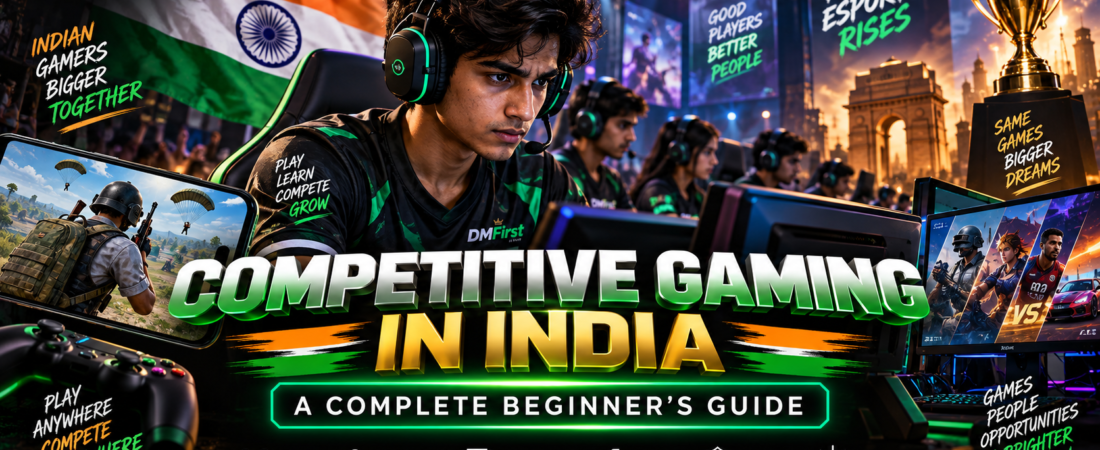
Competitive gaming in India includes gaming experiences where players compete against other individuals or teams based on objectives, performance, rankings or match results. Competitive play can take place across smartphones, computers and consoles, ranging from casual ranked matches to organized tournaments.
For beginners, competitive gaming involves more than simply trying to win. Understanding game mechanics, communication, teamwork, practice routines, tournament formats and responsible gaming habits can help players develop their skills gradually. This guide explains the basics of competitive gaming in India and how beginners can approach competitive play.
What Is Competitive Gaming?
Competitive gaming refers to video games where players compete against other individuals or teams based on specific objectives, rules or performance results. Competition can take place through casual matches, ranked modes, organized tournaments or other structured formats.
Competitive games can require different skills depending on the genre. Some emphasize teamwork and communication, while others focus more heavily on individual decision-making, strategy, accuracy or understanding game mechanics.
Competitive gaming is a broad category and should not automatically be considered esports. Many players participate in competitive matches without entering organized esports tournaments or professional competitions.
How Competitive Gaming Works
Competitive games typically use rules and objectives to determine the outcome of a match. Depending on the game, players may need to earn points, complete objectives, defeat opponents, achieve faster times or meet other conditions to win.
Online games may use matchmaking systems to connect players based on factors such as region, connection quality, selected game mode or player ranking. Some games also include ranked systems where players can progress through different divisions or competitive levels.
Team-based competition can require players to coordinate strategies and understand different roles during a match. Beginners who want to understand these multiplayer systems in more detail can explore our multiplayer gaming in India guide.
Competitive Gaming in India
Competitive gaming in India can take place across smartphones, computers and gaming consoles. Players can participate through ranked multiplayer modes, community competitions and organized tournaments depending on the games and platforms they use.
Mobile devices also provide access to many competitive gaming experiences. Players interested specifically in organized smartphone competition can explore our mobile esports in India guide, which covers mobile esports, tournaments, device requirements and teamwork in greater detail.
Beginners should understand that competitive gaming can exist at different levels. Playing ranked matches with other users is different from participating in a structured tournament, while organized esports can involve additional rules, teams, qualifiers and competition formats.
Popular Types of Competitive Games
Competitive gaming includes many game genres, each requiring different skills, strategies and approaches. Some games focus heavily on teamwork, while others allow players to compete individually.
Understanding the differences between competitive game types can help beginners choose games that match their interests, available devices and preferred style of competition.
Team-Based Games
Team-based competitive games organize players into groups that work toward shared objectives. Individual players may have different roles or responsibilities, making coordination an important part of the overall team strategy.
Communication can help players share information, coordinate actions and respond to changing situations during a match. Learning how to cooperate with teammates can be just as important as developing individual gaming skills.
Battle Royale Games
Battle royale games typically place many players or teams into the same match, with participants competing until a final player or team remains. These games can combine positioning, resource management, decision-making and combat.
Competitive formats may use scoring systems based on factors such as placement and in-game performance. The exact rules can vary between games and tournaments.
Sports and Racing Games
Competitive sports games can be based on digital versions or adaptations of sports such as cricket and football. Players may compete individually or through team-based formats depending on the game.
Racing games generally focus on completing tracks or courses while competing against other players. Performance may depend on factors such as timing, vehicle control, track knowledge and consistent decision-making.
Strategy Games
Competitive strategy games emphasize planning, resource management and decision-making. Players may need to anticipate an opponent’s actions while adapting their own strategy as the match develops.
Different strategy games can involve individual competition, team-based play or longer matches where decisions made earlier can influence later stages of the game.
Individual Competitive Games
Some competitive games place greater emphasis on individual performance rather than team coordination. Players are primarily responsible for their own decisions, strategies and execution during a match.
Individual competition can still involve rankings, matchmaking systems and organized tournaments. Players may review previous matches to identify areas where their performance can improve.
Ranked Gaming and Matchmaking
Many online games include ranked modes designed to place players into competitive matches and track their progress over time. Ranking systems can use divisions, tiers, points or other measurements depending on the game.
Matchmaking systems attempt to create matches using criteria established by the game. These may include player ranking, selected mode, region or connection conditions, although the exact process varies between platforms and games.
Rankings should be viewed as one part of the gaming experience rather than the only measure of progress. Beginners can also focus on improving game knowledge, communication, consistency and decision-making.
Skills Used in Competitive Gaming
Competitive gaming can involve a combination of technical, strategic and communication skills. The importance of each skill depends on the game, competitive format and whether players compete individually or as part of a team.
Game Knowledge and Mechanics
Understanding the rules, objectives, controls and mechanics of a game provides an important foundation for competitive play. Players can gradually learn maps, characters, equipment, strategies or other systems relevant to their chosen game.
Game updates can sometimes change mechanics or competitive strategies, so players should use current information when learning how a game works.
Communication and Teamwork
In team-based games, players may need to exchange information quickly and coordinate their actions. Clear communication can help teammates understand objectives, positions and changes occurring during a match.
Communication should also remain respectful. Mute, block and report tools can be used when players encounter harassment or disruptive behavior.
Decision-Making and Awareness
Competitive matches can require players to make decisions while situations change quickly. Understanding objectives, monitoring opponents and teammates, and recognizing when to change strategy can improve overall awareness.
Beginners can develop these skills gradually by reviewing their decisions after matches instead of focusing only on the final result.
Practice and Consistency
Regular practice can help players become more familiar with controls, mechanics and competitive situations. Practice sessions can be more useful when players focus on specific skills rather than simply playing for long periods.
Taking breaks is also important during extended practice sessions. A balanced routine can help competitive gaming remain compatible with other everyday activities.
Competitive Gaming vs Esports
Competitive gaming and esports are related, but the terms do not always describe the same thing. Competitive gaming broadly includes games where players compete against other players through casual competitive modes, ranked systems or organized events.
Esports generally refers to more structured forms of competitive gaming involving organized matches, defined rules, tournaments, leagues or other formal competition formats. Therefore, a player participating in ranked matches is not necessarily participating in esports.
Readers who want to understand organized competitive gaming in greater detail can explore our esports in India guide.
Competitive Gaming Tournaments
Competitive gaming tournaments provide structured environments where players or teams compete according to established rules. Tournament formats can include qualifiers, group stages, elimination brackets, round-robin formats or final matches.
Before registering, players should review eligibility requirements, schedules, rules, scoring systems and any technical requirements provided by the organizer. Tournament structures can differ significantly between games and events.
Players should use official tournament information when checking registration details or rule changes. They should also be cautious with unofficial messages requesting passwords, verification codes or unnecessary personal information.
How Beginners Can Start Competitive Gaming
Beginners can start by choosing a game they genuinely enjoy and learning its basic mechanics before focusing heavily on rankings or tournaments. Understanding objectives, controls and common strategies can provide a stronger foundation for competitive play.
Playing regular matches can help beginners become familiar with different situations and opponents. Instead of trying to improve everything at once, players can identify specific areas such as positioning, communication, decision-making or game knowledge to practice.
Beginners interested in tournaments should read the rules and eligibility requirements before registering. Starting with appropriate competitive environments can provide useful experience before moving toward more structured competitions.
Online Safety in Competitive Gaming
Competitive games often involve interactions with teammates, opponents and online communities. Players should protect their accounts with strong and unique passwords and enable two-factor authentication when available.
Passwords, verification codes and sensitive payment information should never be shared with other players. Suspicious links, unofficial downloads and unexpected messages offering rewards should also be treated carefully.
Privacy settings, mute tools, blocking features and reporting systems can help manage unwanted interactions. Readers can find additional account and privacy guidance in our online gaming safety in India guide.
Responsible Competitive Gaming
Competitive games can encourage players to spend additional time practicing, improving rankings or completing matches. Maintaining reasonable gaming limits and taking regular breaks can help keep competitive play balanced with everyday life.
Gaming should not consistently replace adequate sleep, education, work, physical activity or other important responsibilities. Players should also understand optional purchases, subscriptions and tournament-related costs before spending money.
Competitive results can change from match to match, so rankings and losses should remain in perspective. For more information about maintaining balanced gaming routines, readers can explore our responsible gaming in India guide.
Frequently Asked Questions
1. What is competitive gaming?
Competitive gaming refers to video games where individuals or teams compete against other players according to specific objectives, rules or performance results.
2. Is competitive gaming the same as esports?
Not always. Competitive gaming is a broad category that can include casual competitive matches and ranked modes, while esports generally involves more structured and organized competition such as tournaments or leagues.
3. What types of games can be competitive?
Competitive games can include team-based games, battle royale games, sports and racing games, strategy games and individual competitive games.
4. How can beginners improve at competitive gaming?
Beginners can learn game mechanics, practice specific skills, improve communication and decision-making, review previous matches and gradually gain experience through competitive play.
5. Is online safety important in competitive gaming?
Yes. Players should protect their accounts, use strong passwords, enable two-factor authentication when available and avoid sharing passwords, verification codes or sensitive payment information.
6. How can players maintain healthy competitive gaming habits?
Players can set reasonable gaming limits, take regular breaks and maintain enough time for sleep, education, work, physical activity and other everyday responsibilities.
Final Thoughts
Competitive gaming in India provides players with different ways to test their skills against other individuals and teams. From ranked multiplayer matches to organized tournaments, competitive games can involve strategy, communication, game knowledge and consistent practice.
Beginners can focus on gradual improvement rather than rankings alone. Understanding online safety, tournament rules and responsible gaming habits can also help create a more balanced competitive gaming experience.
For more guides covering gaming, multiplayer competition, mobile gaming and esports, visit DMFirst and explore our growing collection of gaming information.