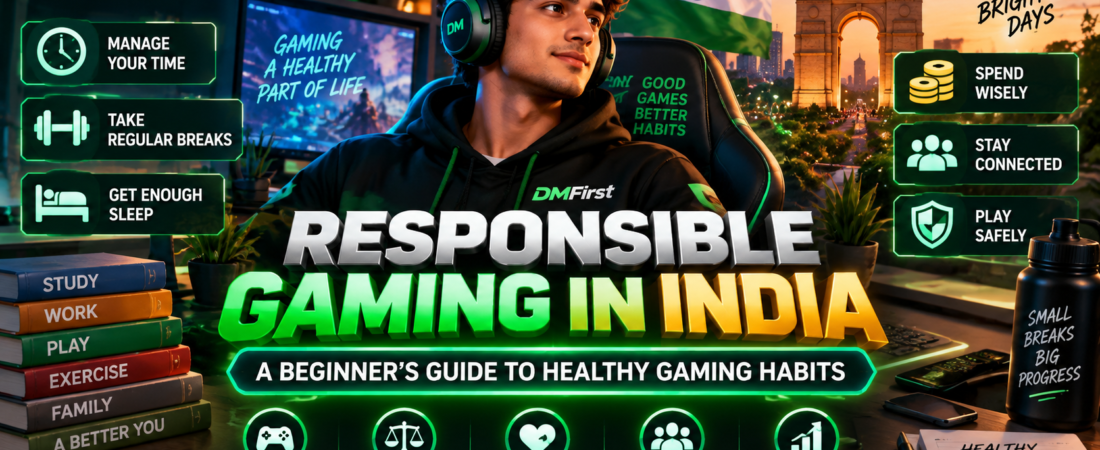
Responsible gaming in India involves developing healthy habits around how much time, attention and money players spend on video games. Gaming can be an enjoyable form of entertainment, but maintaining a balance between gaming and everyday responsibilities is important for players of all experience levels.
Healthy gaming habits can include managing playing time, taking regular breaks, understanding optional purchases and maintaining time for sleep, education, work, physical activity and social interaction. This guide explains practical responsible gaming habits that beginners can use when playing online, mobile and competitive games.
What Is Responsible Gaming?
Responsible gaming refers to maintaining healthy and balanced habits while playing video games. It involves managing gaming time, understanding spending, taking regular breaks and making sure gaming does not consistently interfere with everyday responsibilities.
Responsible gaming can apply to different forms of digital gaming, including mobile games, PC and console games, multiplayer titles and competitive gaming. The goal is not to avoid gaming, but to keep it as a balanced form of entertainment.
Readers who are new to digital gaming can explore our online gaming in India guide to learn more about online games, common game categories and basic gaming practices.
Why Responsible Gaming in India Matters
Video games can provide entertainment, competition and opportunities to interact with other players. However, long gaming sessions without sufficient breaks can reduce the time available for sleep, physical activity, education, work and other everyday activities.
Healthy gaming habits can help players manage their time more effectively and maintain a better balance between gaming and other responsibilities. They can also encourage players to pay attention to their spending and recognize when gaming habits may need to be adjusted.
Different players have different routines, so responsible gaming does not require one fixed schedule. The important principle is maintaining a balance that allows gaming to remain an enjoyable part of everyday life.
Managing Your Gaming Time
Time management is one of the simplest ways to develop healthier gaming habits. Players can plan gaming sessions around their other responsibilities instead of allowing gaming to determine their entire daily schedule.
Set Reasonable Gaming Limits
Players can decide in advance how much time they want to spend gaming during a session or day. Setting a reasonable limit can make it easier to stop playing when other activities or responsibilities require attention.
Take Regular Breaks
Regular breaks can help players step away from the screen during longer gaming sessions. Breaks can be used to move around, rest the eyes, drink water or simply spend some time away from the game.
Maintain a Healthy Sleep Schedule
Gaming late into the night can reduce available sleep time when it becomes a regular habit. Players should consider their usual sleep schedule when deciding how long to continue a gaming session, particularly on days when they have work, school or other responsibilities the following morning.
Balancing Gaming With Everyday Responsibilities
Gaming is only one part of a player’s daily routine. Education, work, sleep, physical activity, relationships and other responsibilities should continue to receive appropriate time and attention.
Planning gaming sessions after important tasks are completed can make it easier to maintain this balance. Players can also create simple routines that separate gaming time from study, work, meals and sleep.
When gaming repeatedly causes important responsibilities to be delayed or ignored, it may be useful to reduce playing time and review the current gaming schedule.
Managing Spending and In-Game Purchases
Many games include optional purchases such as cosmetic items, additional content, subscriptions or other digital features. Players should understand what they are purchasing and how much it costs before completing a transaction.
Setting a personal entertainment budget can help prevent gaming expenses from interfering with essential spending. Players should also check whether a purchase is a one-time payment or a recurring subscription.
Purchase confirmations and transaction histories can be reviewed regularly to identify unexpected charges. Payment information should only be entered through official applications, websites or trusted payment systems.
Healthy Habits for Mobile Gamers
Smartphones make gaming highly accessible because players can carry their games almost anywhere. This convenience can make it especially useful for mobile players to pay attention to how frequently and how long they play.
Mobile gamers can take regular screen breaks, monitor battery and device temperature, and avoid allowing gaming sessions to consistently replace sleep, exercise or other activities. Players should also consider mobile data usage when playing online games away from Wi-Fi networks.
Readers who want to learn more about smartphone gaming, device requirements and online features can explore our mobile gaming in India guide.
Responsible Habits in Competitive Gaming and Esports
Competitive gaming can involve practice sessions, ranked matches, tournaments and team activities. Because competition may encourage players to spend more time improving their performance, maintaining a structured routine can be especially useful.
Players can schedule practice sessions around other responsibilities and take regular breaks during longer periods of competitive play. Match results, rankings and competitive goals should also be kept in perspective so that gaming remains balanced with everyday activities.
Readers interested in organized competitive gaming can learn more through our esports in India guide.
Players who participate in ranked matches and other competitive formats can also explore our competitive gaming in India guide to understand competitive play, rankings, tournaments and the skills involved.
Online Safety and Responsible Gaming
Responsible gaming also includes protecting accounts, personal information and online interactions. Players should use strong passwords, enable two-factor authentication when available and avoid sharing login credentials or verification codes with other users.
Suspicious links, unofficial downloads and messages offering unusual rewards should be treated carefully. Privacy and communication settings can also help players manage who can contact them while gaming online.
For a more detailed explanation of account security, privacy, downloads and multiplayer safety, read our online gaming safety in India guide.
Responsible Gaming for Younger Players
Younger players may benefit from additional guidance when developing gaming habits. Parents or guardians can review age ratings, communication settings, purchase controls and the amount of time spent playing games.
Clear routines can help younger players understand when gaming is appropriate and when attention should be given to sleep, schoolwork, physical activity and other responsibilities.
Parents or guardians can also encourage younger players to discuss uncomfortable interactions, suspicious messages or unexpected purchase requests encountered while gaming online.
When to Review Your Gaming Habits
Gaming habits can change over time, particularly when players start a new game, participate in competitive events or spend more time playing with friends. Reviewing gaming routines occasionally can help players determine whether gaming remains balanced with other parts of everyday life.
Players may want to reconsider their routine when gaming consistently reduces sleep, delays important responsibilities or results in spending beyond their planned entertainment budget. Taking a temporary break or reducing gaming time can help create space for other activities.
Simple adjustments such as setting clearer time limits, scheduling breaks and planning gaming sessions around important responsibilities can help maintain healthier gaming habits.
Frequently Asked Questions
1. What is responsible gaming?
Responsible gaming means maintaining healthy and balanced habits while playing video games, including managing gaming time, taking breaks, understanding spending and keeping everyday responsibilities in balance.
2. Why is responsible gaming important?
Responsible gaming can help players maintain a healthier balance between gaming and activities such as sleep, education, work, physical activity and social interaction.
3. How long should a gaming session be?
There is no single gaming-session length that is appropriate for everyone. Players should consider their responsibilities, routines and overall screen time while taking regular breaks during longer sessions.
4. How can players manage spending in games?
Players can set a personal entertainment budget, understand prices before purchasing, check whether payments are recurring and regularly review their transaction history.
5. How can mobile gamers develop healthier gaming habits?
Mobile gamers can set reasonable playing limits, take regular screen breaks and avoid allowing gaming to consistently replace sleep, exercise, work, education or other important activities.
6. When should players review their gaming habits?
Players may want to review their gaming habits when gaming consistently interferes with sleep or responsibilities, or when gaming expenses regularly exceed their planned entertainment budget.
Final Thoughts
Responsible gaming in India involves maintaining a healthy balance between gaming and everyday life. Managing playing time, taking regular breaks and understanding optional purchases can help players develop more sustainable gaming habits.
Responsible gaming also includes maintaining account security, protecting personal information and approaching competitive gaming with a balanced mindset. Different players have different routines, so healthy gaming habits should be adapted to individual circumstances and responsibilities.
For more gaming insights, guides and updates, visit DMFirst to explore more information about online gaming, mobile gaming, esports and gaming safety.